
Saudi Home Water Meter and Supply Checks
Match a Saudi home’s water-meter identity and supply arrangement to authorised records, normal-use observations and clear follow-up questions.
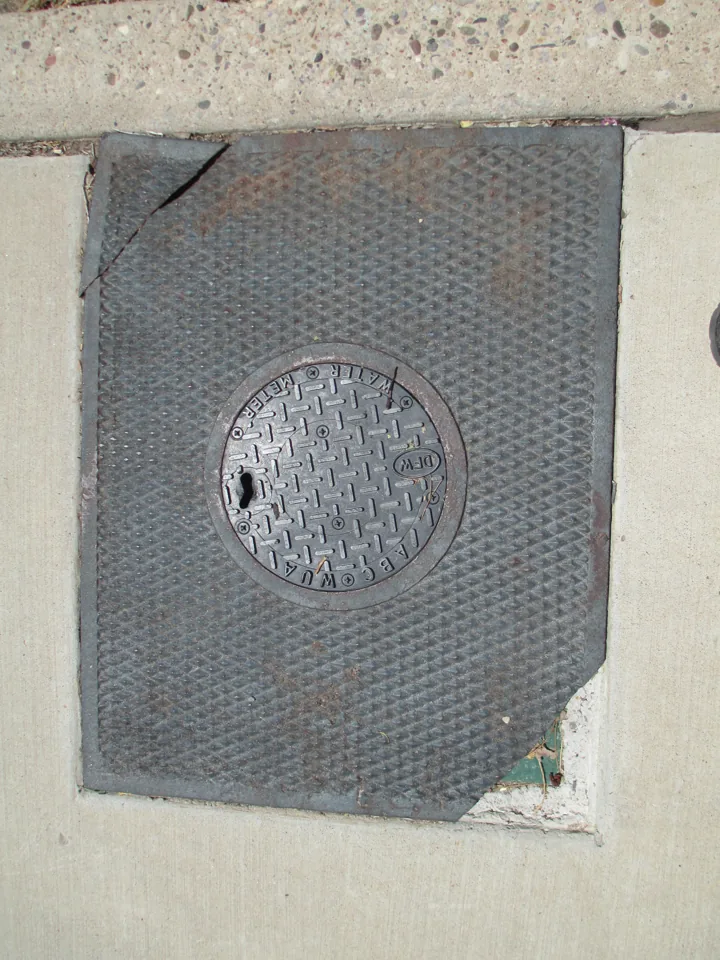

Before relying on a Saudi home’s water arrangements, identify the meter or shared supply serving the actual property, connect that identification to authorised records and observe normal water use with permission. A meter visible beside a building is not automatically the meter for the unit being offered. Water flowing during a viewing does not establish continuous supply, water quality or the condition of concealed pipework.
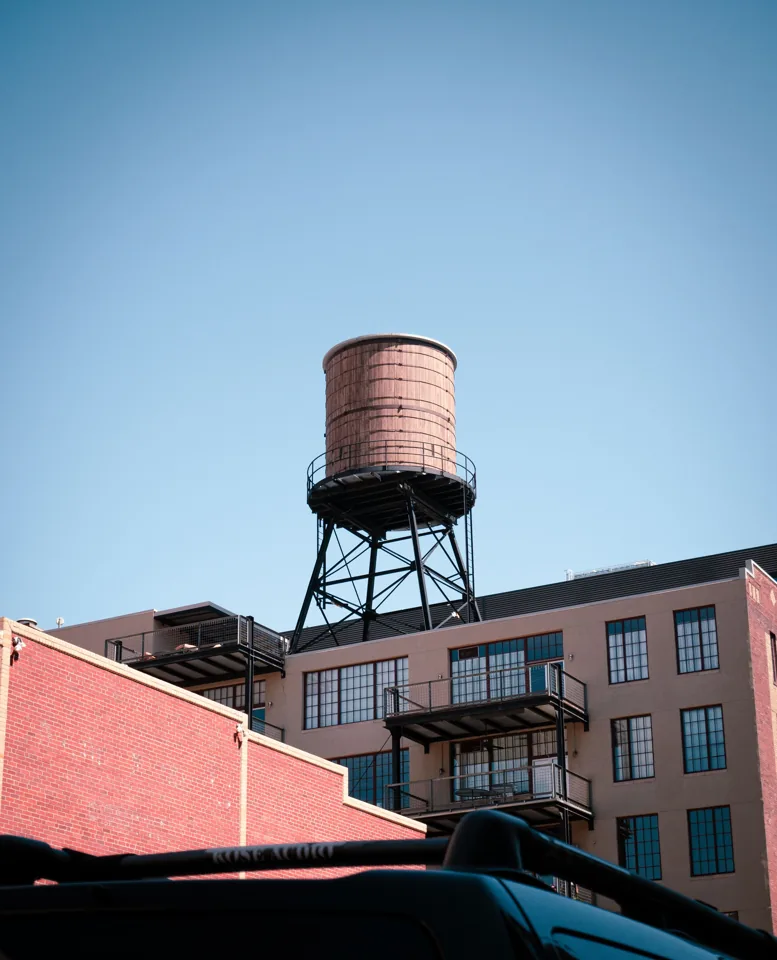
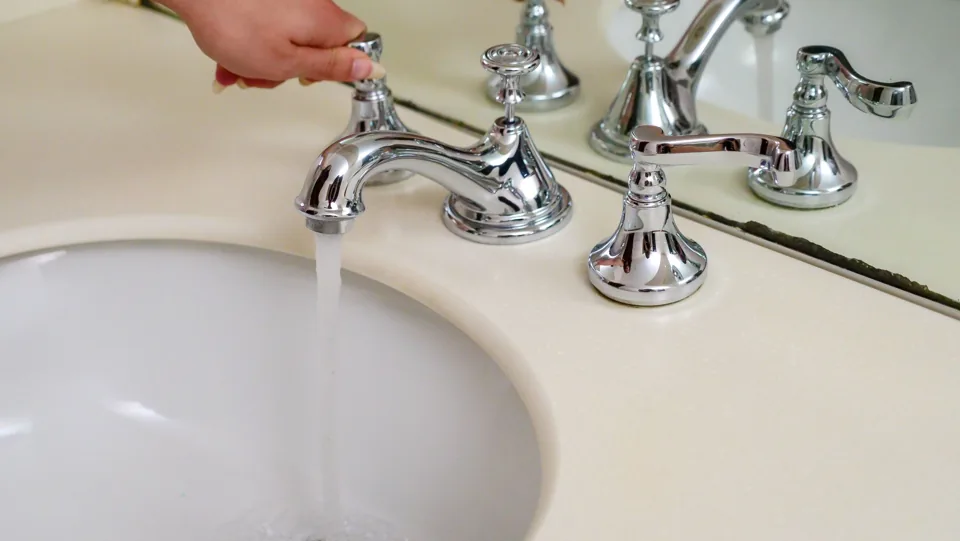
This guide builds a meter-and-supply record for a buyer’s authorised review. It separates equipment identity, service information, shared arrangements and ordinary-use observations. It does not instruct a visitor to operate utility valves, break seals, open tanks, climb to equipment or alter someone else’s account. The photographs are labelled illustrations from outside the verified property file. They show a meter-access cover, a storage tank and water-use points, without claiming that those arrangements apply to a particular Saudi offer.
Start with the actual property reference
Write the property reference before photographing a meter. Include the building and unit identifiers supplied for the offer, the address or entrance reference and the date of the appointment. If the unit name in an advertisement differs from the name used in documents, keep both and request clarification. An accurate meter photograph attached to an ambiguous property reference is still an incomplete record.
Ask the authorised representative to identify the equipment or arrangement said to serve that property. Record who supplied the explanation and whether it is supported by documents. The number nearest the entrance, a label on a cabinet or a handwritten unit name may help locate the equipment, but those observations should not silently become confirmation of the account relationship.
Keep this identity exercise alongside the wider property viewing checklist. The general checklist organises the home. The water record should answer a narrower question: which equipment, account or shared arrangement is being described for this exact asset, and what remains to be confirmed before relying on it?

Separate the meter identity from the reading
A meter’s identifying reference and its displayed reading are different information. Where both are safely visible and permission allows, record them separately with the date and time. Keep the units visible if a reading is captured. Do not invent a unit, a decimal convention or a meter type from a blurred photograph. If the display cannot be read, mark it as unreadable rather than guessing a digit.
Take a wider photograph that shows where the device is installed and a closer photograph of the relevant label or display, where authorised. Avoid including unrelated customer information. A close-up without installation context can be difficult to distinguish from another device in a group; the wider image helps a responsible party find the same meter at a later appointment.
The record should not treat a changing display as a complete consumption history. A snapshot shows the information visible at that time. To compare a period’s use, the records must describe the same device, units and period, with a suitable explanation of intervening changes. This guide supplies no universal consumption benchmark and does not infer the number of occupants from a meter reading.
Match service records through an authorised review
Ask the owner or authorised representative what current service information can be shown for the property. Keep the account reference, property reference and device identification distinct. Review only information that you are authorised to see, and retain the minimum necessary record. A buyer’s viewing is not permission to log into another person’s account or collect unrelated personal data.
The NWC customer user manual, version 02.02 dated August 2026 and checked on 9 October 2026, presents account-related property ownership update requests separately from connection management and new connection activities. That source supports treating these as distinct service questions. It does not verify the account, connection or device serving the home you are considering.
Ask which record establishes the particular relationship and whether a request has merely been submitted or has been resolved. A screenshot of an application should not be relabelled as proof that the requested change is complete. Use current official channels for the actual service matter, with the responsible party’s authority, rather than relying on this article as an account-management procedure or a guarantee of completion.
Establish whether the supply is individual or shared
Ask whether the described arrangement serves one home or more than one unit. Keep the answer connected to the property and the current documentation. Multiple visible meters do not necessarily explain how a bill is allocated, while one visible meter does not by itself establish the contractual arrangement between households. A diagram or written explanation can help when it identifies the actual building and the party responsible for it.
For a shared arrangement, ask which functions are managed jointly and how the relevant information is supplied to residents. Keep the method, period and scope of any stated charge visible. A broad assurance that water is included can hide important unanswered questions about what is included, who receives the provider’s information and how changes are communicated.
Use the service-charge review for the detailed recurring-cost document questions. The meter-and-supply record should not decide an allocation method or legal obligation from appearance. It should identify the arrangement being represented, its evidence and the responsible source for the remaining questions. Where the answer is uncertain, preserve that uncertainty in the shortlist.
Ask how storage and pumping relate to the home
If the offer is described as using storage or pumping equipment, ask where it is located and who is responsible for it. Record whether the equipment is private, shared or not yet clearly identified. A tank pictured above a building does not establish that it serves the offered unit, that it is accessible to a buyer or that its condition has been checked.
Request available information about maintenance and any recent relevant work. Identify the date, equipment and scope rather than accepting a general statement that everything is serviced. A record for one pump cannot be assumed to cover another, and a cleaning reference does not by itself demonstrate water quality or establish that the whole supply arrangement has been assessed.
Do not climb onto a roof, open a tank, enter confined spaces or operate equipment to complete the record. If a location cannot be inspected safely within the authorised appointment, record it as not observed and request appropriate professional assessment. The objective is to understand the represented arrangement and its evidence, not to turn a household viewing into a utility or tank inspection.
Observe ordinary water use with permission
Ask whether normal use of an accessible tap is permitted during the appointment. Record the point used, the time and what you observed. A short observation can show whether water flowed at that point under those conditions. It does not measure pressure accurately, establish supply across every fixture or demonstrate that the same conditions hold throughout the day.
Keep the observation plain. For example, an illustrative note could say that the kitchen tap operated during an authorised appointment and that other points were not tested. That note is more useful than writing water system passed, which would imply a much wider assessment. If several points are observed, give each a room reference and keep their conditions separate.
Stop the activity if there is a concern or the representative asks you to stop. Do not create a stress test by running multiple fixtures, changing controls or leaving water flowing for an extended period without an appropriate authorised assessment. A difference in appearance or flow is a question for follow-up; this guide does not diagnose its cause from a brief viewing.
Keep water appearance separate from quality assessment
Record a visible observation such as discolouration or sediment if it occurs, including the fixture, time and circumstances. Do not decide from appearance alone whether the water is suitable for drinking or whether the cause lies in the provider’s network, storage, pipework or a fitting. Likewise, clear-looking water is not a laboratory result.
If quality is relevant to the decision, ask what current, properly scoped evidence is available and which competent party should assess the concern. A document should identify the sampled location and date so that its relationship to the home can be understood. This article provides no health advice, contaminant threshold or claim that a visual check can establish safety.
Keep a reported concern separate from a confirmed finding. A resident’s account of a past issue can help frame a question without describing today’s conditions. Ask what was investigated, which work was carried out and what evidence supports the present position. That sequence avoids both dismissing a useful report and turning it into an unsupported conclusion about an entire neighbourhood’s water.
Distinguish a supply question from a leak inspection
The meter-and-supply record asks what serves the home, how it is identified and what ordinary use shows. A leak review asks different questions about visible signs, history and appropriate investigation. Link the records when the same observation matters to both, while keeping their scope clear. A meter photograph alone cannot locate a concealed leak.
Use the existing water-leak inspection guide for the broader evidence questions. Note damp marks, reported repairs or unusual observations without assigning a cause. Do not disturb sealed devices, isolate the whole building’s supply or manipulate utility controls in an attempt to prove an explanation during a viewing.
If a specialist is asked to assess a concern, provide the property reference, equipment information and observation record rather than only a close-up photograph. Ask what was tested, what remained inaccessible and which conclusions are within the report’s scope. This makes the specialist’s response easier to connect to the buyer’s actual question and reduces the chance that a limited observation becomes a whole-system assurance.
Prepare the information needed for the eventual handover
A buyer can identify handover questions during the viewing without carrying out a service change prematurely. Ask who will supply the relevant current records, what device or account references should match and what matters remain unresolved. Keep the planned handover date distinct from a provider’s confirmed response or an observed final reading.
The utility handover guide develops that later stage. The present record contributes the asset-specific information needed to ask better questions. It does not establish transfer eligibility, settle an account balance or promise that a request will be processed by a particular date. The applicable current procedure and the responsible party’s authority should be checked through the official service.
Where a final observation or document is expected, make it clear who is meant to obtain it and how it will be identified. An undated image circulated through several messages can be difficult to use later. A concise record linked to the property, device and actual observation time is easier to reconcile with the rest of the handover file.
Resolve mismatches through a clear question list
If a document, device label and representative’s explanation do not agree, record the mismatch exactly. Do not choose the most convenient reference merely because it makes the file look complete. Ask the responsible party which reference is current, why the difference exists and what evidence resolves it for the actual property.
An original illustrative question might identify a unit reference used in the offer and a different unit reference on a supplied service document. The requested response would explain whether they describe the same asset and provide an appropriate current record. The example does not imply that every difference is an error or that a particular explanation is acceptable without review. It shows how to make the question answerable.
Prioritise issues that prevent understanding the arrangement. An unreadable meter label, unknown shared responsibility and an unanswered account-identity question are different gaps. Give each a stable entry so that a response to one does not silently close the others. Preserve the original observation and add the dated explanation or follow-up evidence beside it.
Questions to answer before relying on the supply record
Does a visible meter prove that service is active for the offered home? It identifies equipment that may need matching to the property and current service records. Normal flow at one fixture adds a limited observation. Neither alone supplies the full account relationship or guarantees future continuity. Keep the evidence objects separate so that the conclusion remains within their combined scope.
Does a completed service request replace a condition assessment? An administrative update and an equipment assessment answer different questions. A provider or authorised party’s account response should not be used to certify private pipework, storage or every fixture. Likewise, a plumber’s report should not be treated as a decision about another person’s account or an undocumented allocation arrangement.
What should the buyer retain? Keep the property reference, safely observed meter information, authorised document references, stated supply arrangement, normal-use observations and outstanding questions. Add source dates and clear limits. The result should help the buyer, representative and appropriate professionals discuss the same home and equipment. That is a useful preparation outcome without inventing a legal entitlement, a water-quality finding or a universal promise about service.
Sources and review
- NWC customer user manual, version 02.02 — reviewed 9 October 2026. Arabic manual despite English filename; cover and pages 23/26/38/39/106–108 read. Distinct ownership-update, connection management and installation activities only; no property/account verification or procedural promise.