
Saudi Apartment Service Charges: What Buyers Should Review
Review Saudi apartment service charges, budget scope, unit statements, major works and arrears before relying on an advertised ownership cost.


Understand what the charge pays for
Saudi apartment service charges should be reviewed as part of the building's operating arrangements, not treated as a small figure beneath the purchase price. Ask for the current charge, the period it covers, the basis of allocation and the services included. Then examine how the owners' association or manager budgets, collects and spends money. A low charge is not automatically good value if essential maintenance is deferred or a major repair has no funding plan.
This is a buyer's evidence checklist, not a table of market rates. Buildings vary in size, systems and facilities, so a national average would be a weak basis for your decision even if it were available. Use the completion budget to keep the first payment separate from later recurring charges and any other shared-property commitments disclosed for the unit.
Request the current budget and unit statement
Ask who is responsible for managing the building and obtaining the records. Request the current approved budget, the charging period and the statement associated with the unit. Identify whether the figure quoted is annual, quarterly or monthly, whether it relates to the present year and whether it includes any one-off assessment. Record the date of the information. A receipt from a previous year cannot establish the coming year's charge.
The REGA Mullak platform explains the framework for owners' associations and shared property management. Use the building's actual association and governing records to establish the arrangement. Do not assume that every building has identical services or that a property manager's informal estimate is an approved budget. If the responsible person cannot provide the basis of a charge, keep the amount provisional in your analysis.
Ask for an explanation of the unit's allocation method against the relevant documents. Review what happens when part of the building benefits from a particular facility and whether there are separate cost categories. This guide does not prescribe an allocation formula. The official law, building records and appropriate advice should resolve the unit's obligations rather than a generic calculation copied from another development.

Read the services behind the total
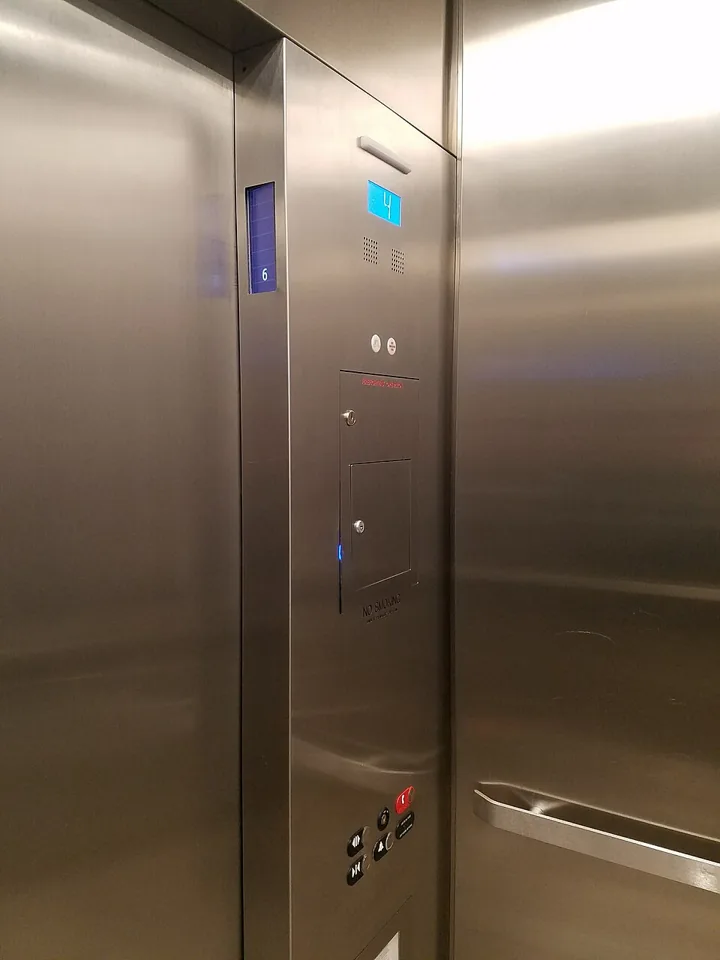
Break the budget into understandable functions: cleaning, security where provided, lift servicing, shared electricity, landscaping, management and other disclosed items. Ask whether the quoted amount includes only routine operation or also funds future replacement. A building with a lift, access controls and landscaped grounds has a different maintenance profile from a simpler walk-up building. Compare the charge against the systems actually present.
Inspect visible service quality during the property viewing. Look at common areas and ask about work orders and maintenance records. Clean surfaces alone do not demonstrate that hidden systems are well maintained. Conversely, a small cosmetic defect does not establish financial mismanagement. Connect observations to records and ask the responsible manager to explain the difference.
Create a short list of inclusions and exclusions. For example, servicing a shared lift does not necessarily include maintenance inside your apartment. Utilities serving the unit may be separate from common-area consumption. Get clarification about items marketed as included so you do not budget twice or omit them. The purpose is a realistic ownership cost, not a search for the lowest headline fee.
Examine repairs, reserves and arrears
Ask about known major works, quotations already obtained and how any funding decision is being handled. A reserve balance can be useful, but it should be read against expected work and the building's condition. A large balance does not by itself establish adequacy; a small one does not identify the correct repair cost. Ask for dates, scope and the basis of estimates rather than accepting a general reassurance that everything is covered.
Request clarification of any unpaid amounts associated with the unit and how they will be addressed in the transaction. Do not assume the seller's statement that charges are settled is enough, or decide yourself who legally bears a disputed sum. Bring the issue to the professionals reviewing the purchase agreement, with a current statement and a clear question about responsibility and completion.
For illustration, a quoted recurring charge of SAR 6,000 annually is SAR 500 per month when averaged for planning. A separately disclosed SAR 12,000 assessment would change the cash needed in the year it is due. These invented figures are not typical Saudi charges or estimates for any building. Their purpose is to show why a monthly average and a dated payment obligation should appear in different parts of your budget.
Test the investment effect without double counting
For a rental purchase, identify which costs you expect the owner to bear under the reviewed lease and building arrangements. Deduct those costs consistently when comparing net operating income. Use the rental yield guide for the broader calculation, keeping financing and major replacement assumptions visible rather than hiding everything in one expense percentage.
Compare two units with the same service scope before drawing conclusions. One charge may include functions paid separately in another building. If a recurring amount is unknown, show a range as an assumption and state what evidence would replace it. Do not portray a placeholder as a confirmed quotation or investment return.
Leave with a specific ownership-cost record
Before deciding, your file should contain the current amount, period, allocation basis, services, exclusions, payment timing and unresolved repair or arrears questions. Confirm who can issue the next statement and explain future changes. This information is useful after purchase as well as before it.
A sound review does not require predicting every future expense. It requires knowing which costs are supported, which remain uncertain and who is responsible for answering the gaps. That is a stronger basis for owning a shared building than assuming that an inexpensive advertised charge will remain unchanged indefinitely.
Sources and review
- REGA Mullak platform — reviewed 29 September 2026. Primary source for factual context; examples and decision methods are original editorial analysis.
- REGA joint real estate ownership law — reviewed 29 September 2026. Primary source for factual context; examples and decision methods are original editorial analysis.