
Smoke-Alarm Checks Before Choosing a Saudi Home
Identify smoke-warning equipment, match its manual, coordinate checks and track records before choosing or taking handover of a Saudi home.
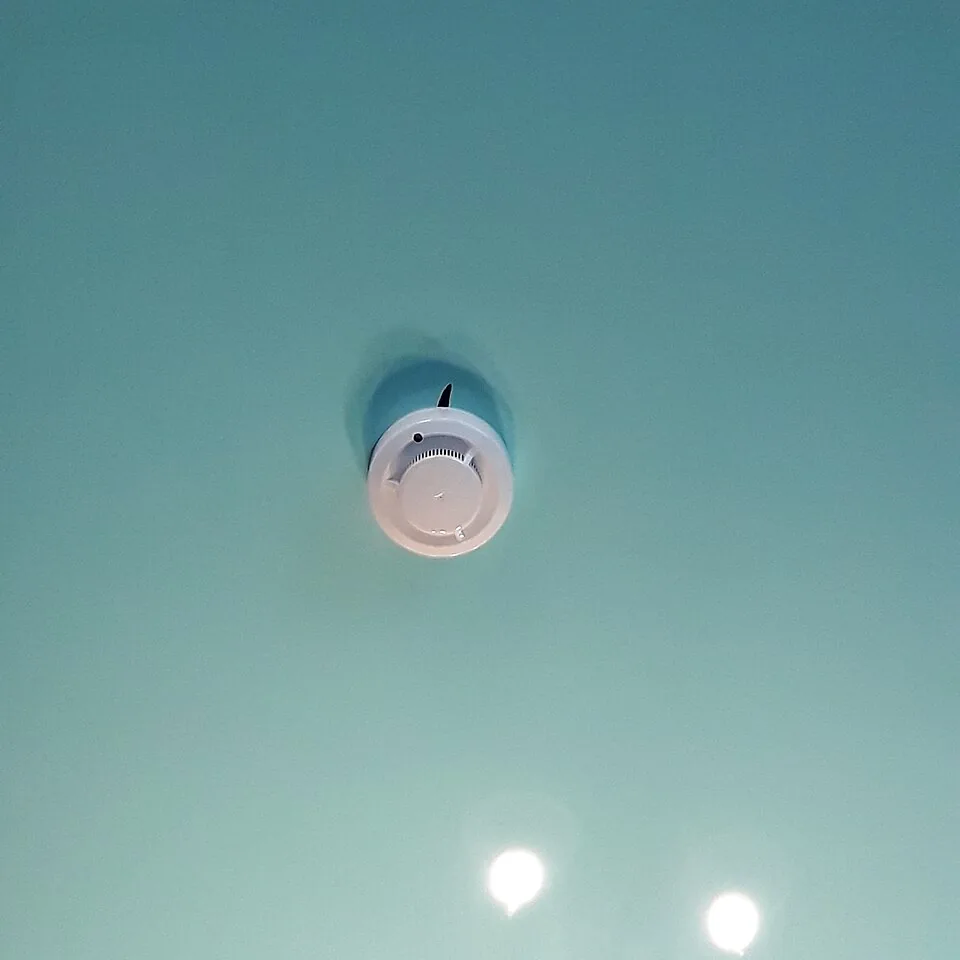

Before choosing a home in Saudi Arabia, identify its smoke-warning equipment, ask for model-specific instructions and arrange appropriate checks with the owner or building manager. Seeing a round device on the ceiling is only the beginning. You need to know what it is, whether it belongs to a wider system, what records support its condition and who will deal with unresolved faults before occupation.
This is a viewing and handover workflow, reviewed on 3 October 2026. It does not certify a property or prescribe a universal Saudi installation standard. The applicable requirements for a building, and the design or repair of its fire-warning system, need confirmation by the relevant authority and competent professionals. Your role as a prospective buyer is to gather evidence and resolve questions without interfering with the equipment.
Identify the device and its system
Start with a room-by-room record from areas you are permitted to access. Note the location of each visible device and ask the owner or manager to identify its manufacturer, model and function. Do not guess whether it detects smoke, heat or another condition from its shape. A ceiling-mounted detector may be part of a building system rather than a standalone household alarm.
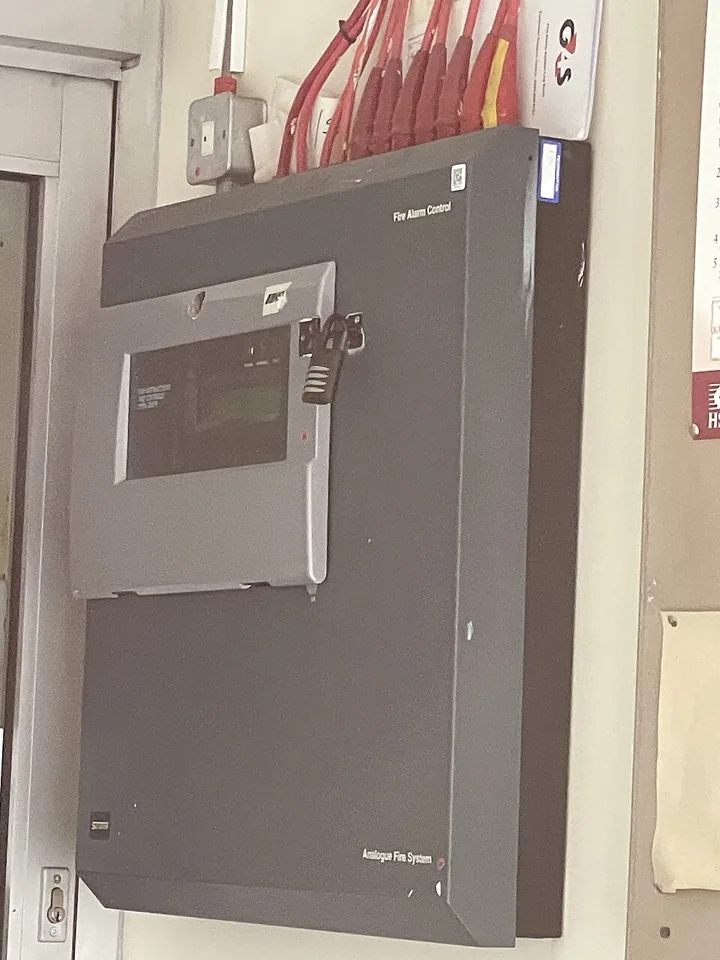
Ask how the home relates to any shared building equipment. Who manages it? Where are relevant instructions and maintenance records kept? Who can explain what happens when a detector activates? Record the answers and the supporting documents separately. A verbal assurance can guide your next question, but it is not the same as a dated service record.
If a model label cannot be read safely from your permitted position, request identification from the responsible person. Do not dismantle a device, remove a cover or climb an improvised support during a viewing. Use the wider property viewing checklist to keep these observations alongside the home's other condition checks.

Match instructions to the installed model
First Alert's manufacturer guidance directs users to check alarm age and use the alarm's test button, and to replace an alarm that does not test properly according to its manual. These are manufacturer instructions, not evidence that First Alert equipment is installed in the property or that a US product is approved for that Saudi building.
The First Alert P1210 manual illustrates why identification matters: it specifies testing and maintenance for that particular model, warns against using an open flame and explains its own warning signals. Do not copy its intervals, signals or replacement procedure onto a different device. Obtain the correct current manual for the equipment actually present.
Keep a copy or accessible link in the property's handover file. If the supplied manual does not match the visible model, treat the mismatch as an unresolved question. The useful outcome is a clear instruction set for the installed equipment, rather than a folder of generic safety brochures.
Coordinate checks before anybody operates equipment
Ask the owner or building manager what check can be carried out safely, by whom and under which instructions. Where equipment is connected to a shared system, arrange the check through the responsible manager and service provider. An uncoordinated action can affect people outside the apartment.
For a standalone alarm, any demonstration should follow its verified manufacturer instructions and be agreed with the responsible person. For system detectors, do not assume there is a household-style test button or that a buyer should operate the device. Ask a competent professional to define the appropriate inspection and functional verification.
Do not test with a flame, create smoke, spray an unknown substance into a detector or disconnect equipment to stop a sound. Do not open or reset a shared control panel. If a warning occurs outside an agreed test, take it seriously and follow the building's emergency arrangements. A fault or unexplained signal needs attention from the responsible person, rather than an improvised silence-and-forget response.
Record visible concerns without diagnosing them
From a safe viewing position, record obvious damage, a missing cover, a covered device or an obstruction. Photograph only where permitted. Use neutral wording such as “device in hallway appears covered” rather than declaring it defective or compliant. The observation gives the owner or professional a specific item to investigate.
Likewise, a lit indicator or a sound is an observation, not a complete interpretation. Different models can use different signals. Ask for the meaning in the matching instructions and any professional findings. Do not label every brief sound a low-battery warning or assume a quiet device is functioning correctly.
Add unresolved items to a property snagging log. Give each one a location, an evidence reference, a responsible person and an agreed route to resolution. Record whether you have received an explanation, a service result or evidence of completed work; those are different stages.
Ask what the records actually cover
A maintenance document is useful when its scope is clear. Check the date, property or building identifier, equipment covered, work performed and unresolved findings. Ask whether the document concerns equipment inside this home, shared equipment, or both. A general building record should not silently be treated as a record for every device in a unit.
If a report notes corrective work, ask for the corresponding completion evidence. A recommendation, a quotation and a record of work completed are not interchangeable. Where a professional test is required, agree what evidence will demonstrate that the concern has been addressed and when you will receive it.
Keep alarm checks distinct from the home electrical inspection. The subjects may overlap for powered equipment, but the existence of one report does not establish the scope of another. Ask the relevant professionals how their findings connect instead of filling gaps by assumption.
Compare two homes using evidence
Imagine two hypothetical homes with similar-looking ceiling devices. The first owner can identify the equipment and provide matching instructions and relevant records. The second offers only an assurance that the devices are new. Those observations do not certify the first home or prove a fault in the second, but they show where your remaining questions differ.
For the first home, read the records and clarify unresolved findings. For the second, request identification and appropriate verification before relying on the assurance. Do not place an invented monetary value on either situation. Obtain actual professional advice and any necessary work quotation if the findings affect your purchase decision.
Keep the comparison focused on missing evidence and agreed action. A photograph of a new-looking device cannot establish installation quality, system compatibility or coverage of the home's spaces. Those questions need the relevant assessment, rather than a buyer's visual score.
Include the household and the handover
Explain any warning or communication needs of the people who will live in the home to the responsible professional. Ask how the proposed arrangement addresses those needs, including anyone who may not perceive a standard audible warning. Do not choose an additional device solely because its appearance resembles existing equipment; compatibility and suitability need verification.
Before occupation, confirm who maintains equipment within the home and who manages shared systems. Record contact arrangements, instructions, outstanding work and the relevant evidence in the property handover checklist. Have responsibilities clarified in the applicable agreement rather than assuming the previous occupant's arrangement continues.
- Identify each relevant device and the system it belongs to.
- Obtain matching instructions and records with a clear scope.
- Arrange permitted checks through the responsible person or professional.
- Track concerns through completion evidence.
- Confirm instructions, contacts and maintenance responsibilities before occupation.
The goal is a home whose warning equipment you can understand and whose unresolved questions have an accountable route to resolution. A careful evidence file supports that goal far better than an unrecorded demonstration during a rushed viewing.
Sources and review
- First Alert: alarm age and test guidance — reviewed 3 October 2026. Manufacturer primary guidance; not Saudi legislation or a claim about equipment installed at a specific home.
- First Alert: P1210 user manual — reviewed 3 October 2026. Model-specific manual read, including test-button and no-open-flame instructions. Only an example of why the actual model's manual is needed. No universal interval or Saudi compliance rule asserted.