
Inspecting Doors and Hardware Before Buying a Saudi Home
Check doors, frames, hinges, handles and closers during an authorised Saudi home viewing, with clear records and professional follow-up.
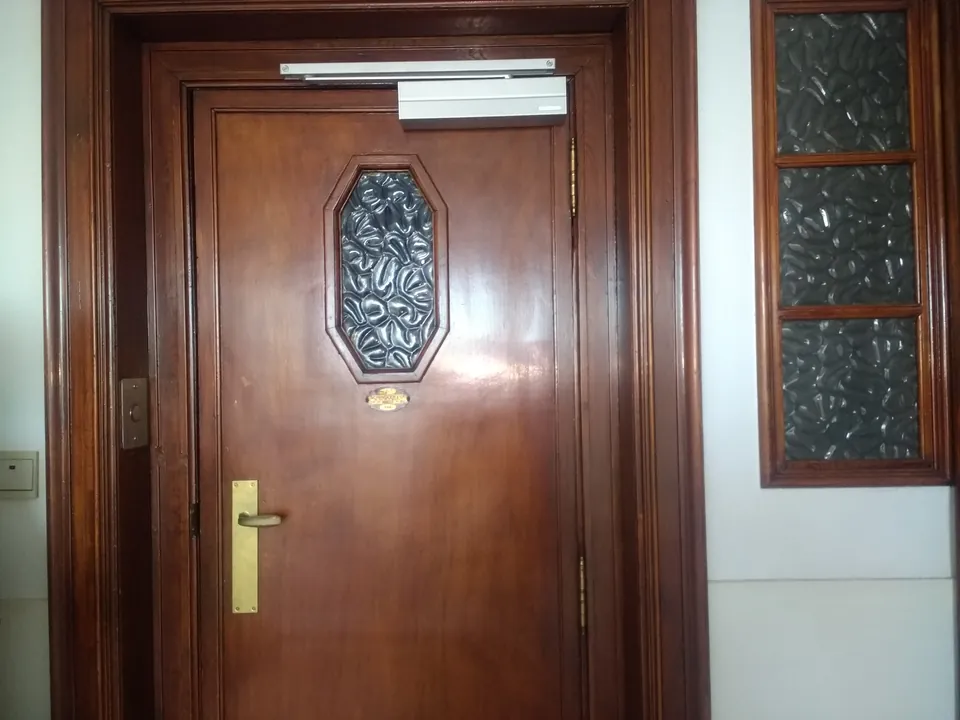

Before buying a home in Saudi Arabia, ask the owner to demonstrate each door in normal use and record anything that prevents it from opening, closing or latching consistently. Start with the complete opening: the moving panel, frame, hinges, handle, floor junction and any closer. A clean painted surface cannot establish that these parts work together. A viewing can identify questions for a qualified inspector; it cannot establish concealed construction, fire performance or compliance from appearance alone.
This guide helps you turn a sticking bedroom door, a loose handle or an uneven entrance threshold into a precise follow-up request. It applies to observations during an authorised viewing of an apartment or house, rather than a repair procedure. Obtain permission before operating hardware or photographing details, keep people clear of the moving panel, and let the owner handle keys and unfamiliar mechanisms. Review date: 8 October 2026.
Give every opening an identity
Number doors by location before recording faults: entrance D01, hall bathroom D02, first bedroom D03. In a larger home, add the floor and room description. A supplier can rarely quote accurately from “the door near the stairs”; two similar doors may have different hardware and different problems. A small location sketch or annotated room list makes the record usable after the viewing.
Record whether the opening has one hinged panel, two panels, a sliding panel or another arrangement. Note the visible material without guessing a concealed core: “painted panel” is more defensible than “solid timber” when no specification is available. Record which side you viewed and whether the owner demonstrated operation. A door that was inaccessible belongs in the untested column, not the satisfactory column.
For the wider inspection sequence, use the Saudi property viewing checklist. Keep this component record alongside it so that a problem noticed in one room does not disappear into a general impression of the property.

Observe a normal opening and closing cycle
Ask the owner to open the door, close it and show how the handle operates. Watch the movement without forcing it beyond its normal range. Listen for scraping and note the point in the movement where resistance occurs. A single observation such as “scrapes the floor during the final part of closing” gives an inspector more information than “poor door”. Avoid turning that observation into a diagnosis about settlement or installation.
If a second normal cycle is appropriate, ask whether the behaviour repeats. Record the conditions, including any floor mat, adjacent door or temporary obstruction. Removing an object should be the owner's decision. Repeated difficulty deserves follow-up even if someone can make the door close by lifting the handle, pulling harder or changing their grip. Record that extra action rather than copying it yourself.
Do not make repeated tests when there is broken glass, an unstable panel or hardware that appears ready to detach. Keep the opening clear and request a specialist assessment. The useful outcome is an accurate observation and a defined next step, not a successful demonstration at any cost.

Read the frame and surrounding finishes together
Look at the frame, the visible junction with the wall and the perimeter of the closed panel. Note chipped edges, disturbed trim, inconsistent clearances and areas of fresh finish. These details can help an inspector decide where to examine further, but they do not reveal the cause by themselves. New paint may reflect ordinary decorating, a completed repair or an unresolved issue; ask for the history instead of choosing the most alarming explanation.
Photograph the complete opening before taking a detail photograph, if permitted. A close-up of one corner without context can be difficult to place and easy to misinterpret. Use the door number in your notes and describe the affected side. Distinguish damage to decorative trim from movement at the frame itself, leaving uncertain construction details explicitly unresolved.
Where a seller reports a past repair, ask what was repaired, when it was done and whether a work record is available. An invoice can identify a contractor and scope, but it is not proof that the entire opening now performs correctly. Request both the document and a demonstration of the current condition.
Look at hinges without dismantling them
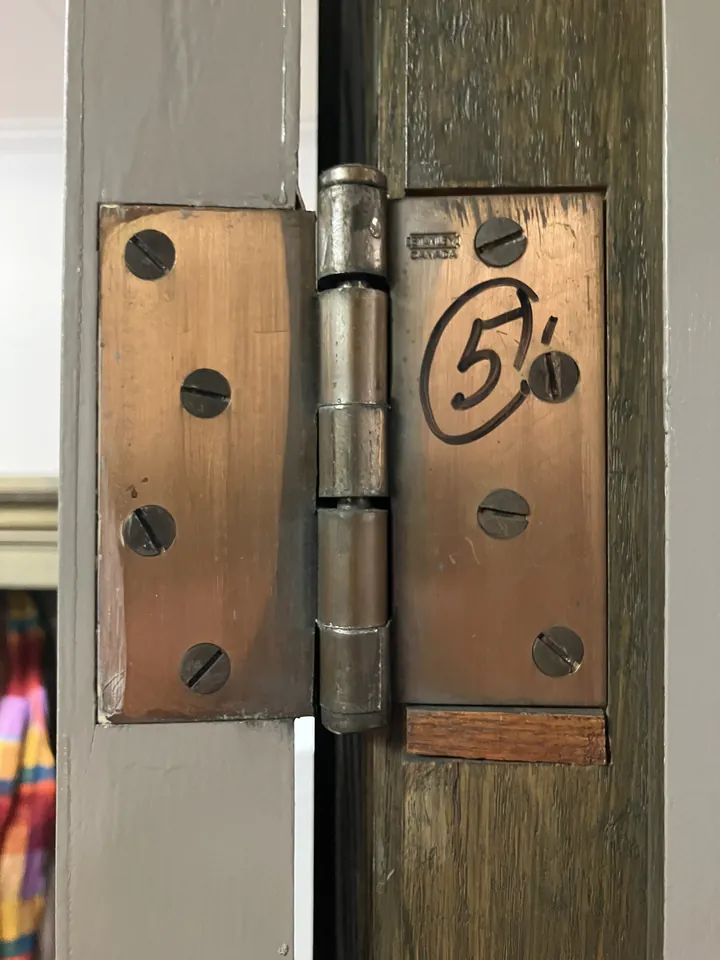
A hinge connects the moving door to the frame, but its visible shape cannot establish that the full assembly is suitable for the particular panel and application. Ask for the actual hardware specification where this matters. At a viewing, the practical question is whether the visible hardware and the door's movement warrant closer examination, rather than whether a generic hinge count looks right.
Observe accessible hinges with the owner holding the door safely. Note visibly missing fixings, distorted metal, rust staining or a component that moves relative to the surrounding surface during normal operation. Do not remove screws, pull out pins or attempt to tighten hardware. A qualified person may need to establish the material behind the fixing and whether the assembly is suitable for the panel.
Separate appearance from function. A tarnished finish and a loose fixing are different observations and may need different responses. Conversely, a polished hinge can still require investigation if the panel sags or binds. Your record should connect each visible detail with the operation actually observed, without treating either one as a complete diagnosis.
Separate handle, latch and key demonstrations
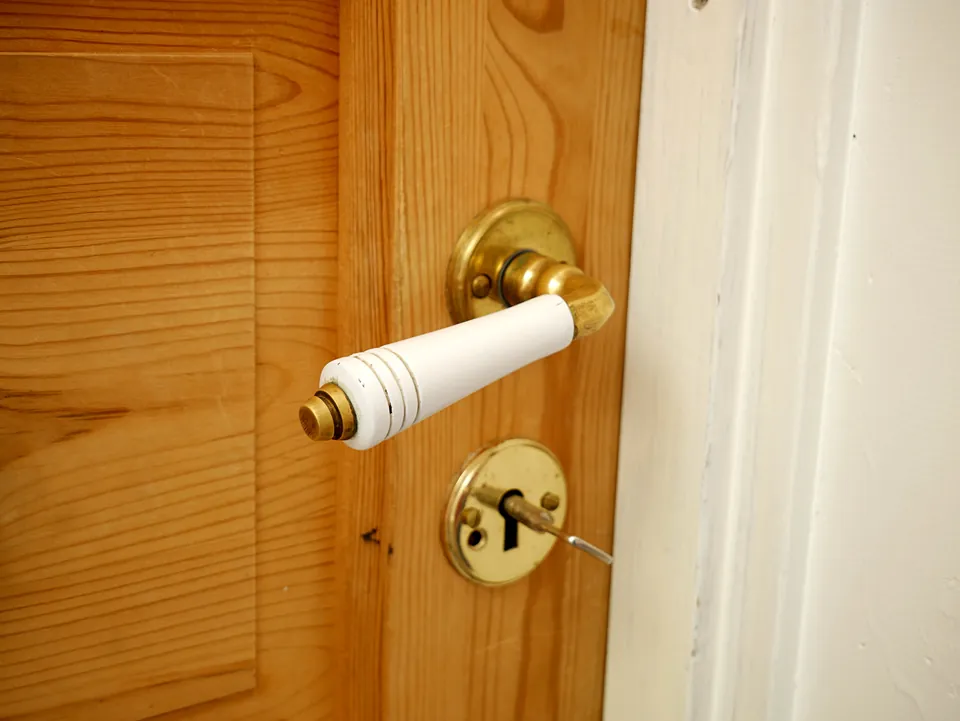
A handle may move normally while the latch fails to engage, or the latch may engage while the owner has difficulty operating the key. Record these as separate items. Ask the owner to demonstrate the ordinary sequence with their own key and explain which hardware will remain at handover. Do not photograph keys, access codes or other security information for a general inspection record.
Note whether the handle returns to its usual position and whether normal closing achieves engagement without lifting or pushing the panel unusually. Avoid testing resistance by pulling aggressively, probing the mechanism or trying another key. The point is to observe intended use with permission. A seller's statement that “it only needs adjustment” should become a request for a defined repair and reinspection, rather than an assumed low-cost solution.
Keep repair questions separate from the later arrangements for authorised key delivery and access. The condition record should identify the opening, the observed behaviour and the required demonstration after repair. It need not contain information that would allow someone else to enter the home.
Treat a closer as part of the opening
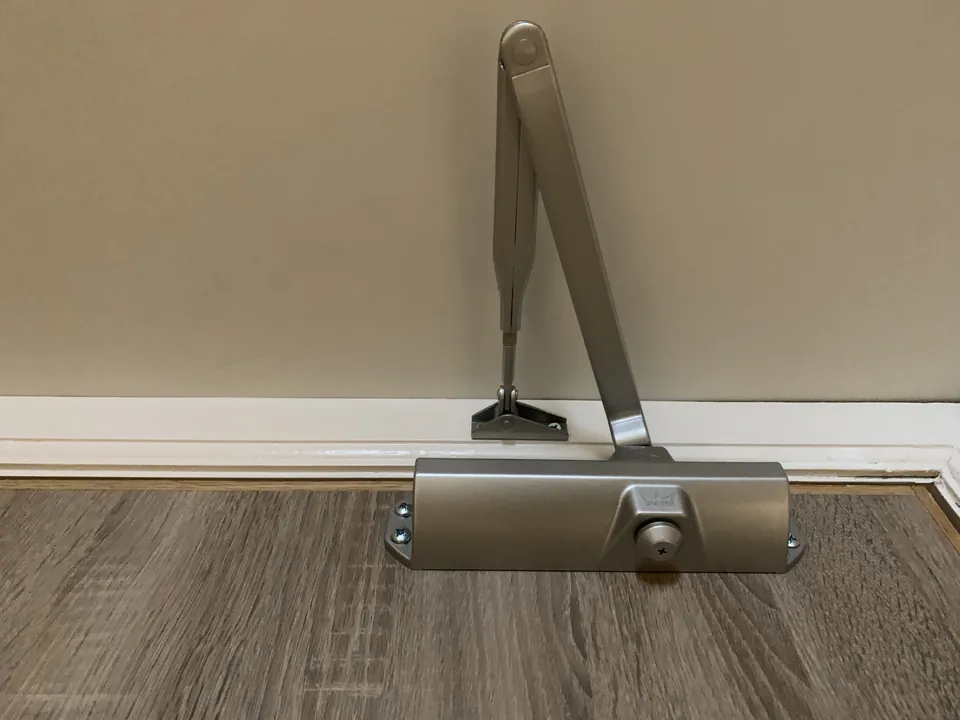
A door closer is a separate mechanism with its own model, installation and maintenance needs. ASSA ABLOY's Middle East door-closer page explains the general purpose of controlled closing. That context does not determine the appropriate setting for a particular door or establish a Saudi regulatory requirement.
Ask the owner to demonstrate an unfamiliar closer rather than manipulating its adjustment points. Record whether the door closes consistently under the demonstrated conditions and whether there is an abrupt movement that requires further investigation. People, pets and belongings should stay clear of the closing path. Do not prop open a shared or potentially safety-related door to make the inspection easier.
Where a closer is fitted, request the model information and available service history. If it is part of a shared entrance, ask the building manager who is responsible for assessment and repair. A problem in a common area may require a different follow-up route from a bedroom handle inside the apartment; the physical observation should still be specific.

Include the floor junction and usable approach
Observe where the door meets the floor and how someone approaches it. Note a raised transition, damaged threshold, loose edging or a mat that interferes with movement. Describe what is visible and how the opening was used. Do not infer a compliant threshold dimension from a photograph or assume that a floor transition can be changed without affecting other parts of the opening.
Consider the route with your household's actual needs in mind. A door that opens smoothly may still be awkward beside a tight corridor, storage cabinet or planned furniture arrangement. The separate home accessibility guide helps assess the route and the user, while this guide records the door assembly's observed condition.
Bring measurements or mobility requirements to a suitably qualified professional when they matter to the purchase. An approximate viewing measurement is useful for identifying a question; it should not become a compliance statement or a promise that a particular device will pass comfortably through the opening.
Adapt the record for sliding and glazed doors
For a sliding door, ask the owner to demonstrate normal movement and the ordinary method of keeping it closed. Observe the accessible track, handle and visible edges without lifting the panel or reaching into concealed mechanisms. Record debris, damage or resistance where visible. Avoid assuming that a difficult slide merely needs cleaning: the assembly may need a different assessment or replacement part.
For glazed panels, stand clear of damaged glass and record the affected area from a safe position. Appearance cannot establish the glass specification, and a small marking should be documented for professional interpretation rather than read as a complete safety certificate. Do not press against glass to test strength or remove a cover to inspect a concealed edge.
An opening onto a balcony or external area also raises questions about the building envelope. Keep those questions with the window inspection guide, rather than deciding from a door demonstration whether water resistance, drainage or weather protection is adequate.
Ask for documents before accepting performance claims
If an opening is described as having a fire, acoustic, security or other special performance, request the specification and evidence relevant to the installed assembly. A visible label, a heavy panel or an expensive handle does not establish the performance of the complete opening. Record the claim as the seller's statement until the appropriate professional reviews the documentation and installation.
Saudi requirements must be checked for the actual building and application. Ask your suitably qualified adviser to identify the actual documents and standards relevant to the opening, rather than importing a foreign example or treating a general web guide as a certificate. This guide supplies no universal minimum opening width, prescribed fire rating or permit exemption. Those questions need the applicable documents and an appropriately qualified adviser.
For routine servicing, obtain instructions for the actual hardware. ASSA ABLOY's lock-maintenance guidance distinguishes maintenance by component and conditions. Do not import a foreign climate recommendation as a Saudi service schedule or apply one lubricant to every mechanism. No maintenance should be improvised during a purchase viewing.
Convert observations into a repair request
Write a request that someone can inspect and verify: “D03 bedroom panel scrapes the floor near the closed position; owner demonstrated the behaviour twice; assess the cause and provide the proposed repair scope.” Include permitted photographs, the location and the conditions observed. Leave the repair method to the qualified person and ask for any limitations in the assessment.
A useful quotation identifies the opening, work included, materials or hardware proposed, responsibility for adjacent finishes and the demonstration expected after completion. Ask whether there are uncertainties that could change the scope once work begins. A vague allowance for “door adjustments” can conceal very different tasks and should not be treated as an agreed price for resolving every issue.
Keep cost estimates dated and property-specific. This guide does not assign a Saudi market price or assume that all observed defects are inexpensive. If an unresolved issue affects your purchase decision, make sure the next inspection and contractual discussion address it before relying on a promised future fix.
Verify the outcome rather than the promise
After a reported repair, return to the same door identity and observation. Ask for the completion record and repeat the agreed normal-use demonstration with permission. Compare the outcome with the original request: does the panel still scrape, does the latch now engage, and were adjacent finishes included? A photograph of new hardware alone may not answer the original question.
Keep separate columns for observed, reported, untested and professionally assessed items. This prevents an owner explanation from silently becoming your own inspection conclusion. Record any access limitation that remains, including doors behind furniture or shared areas that could not be inspected. An unavailable demonstration leaves uncertainty even when the rest of the home presents well.
The next useful action is to take this door schedule to the inspector alongside the wider viewing notes. Prioritise items affecting normal access, unstable components and unsupported performance claims. A precise record helps the buyer, seller and inspector discuss the same opening, the same behaviour and the same unresolved question.
Sources and review
- ASSA ABLOY: Door closers — reviewed 8 October 2026. Middle East manufacturer explanation of closing mechanisms; not an endorsement, a model-specific instruction or a Saudi statutory threshold.
- ASSA ABLOY: Maintaining your locks — reviewed 8 October 2026. Manufacturer distinguishes maintenance by hardware and exposure. Foreign climate guidance not converted into a Saudi service interval; no maintenance performed during viewing.