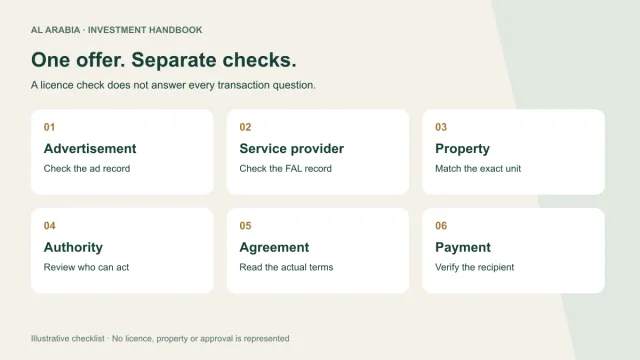
How to Verify a Saudi Property Listing and Broker Before Paying
Check a Saudi property advertisement, FAL licence, unit details and payment instructions before making a financial commitment.
Read more →
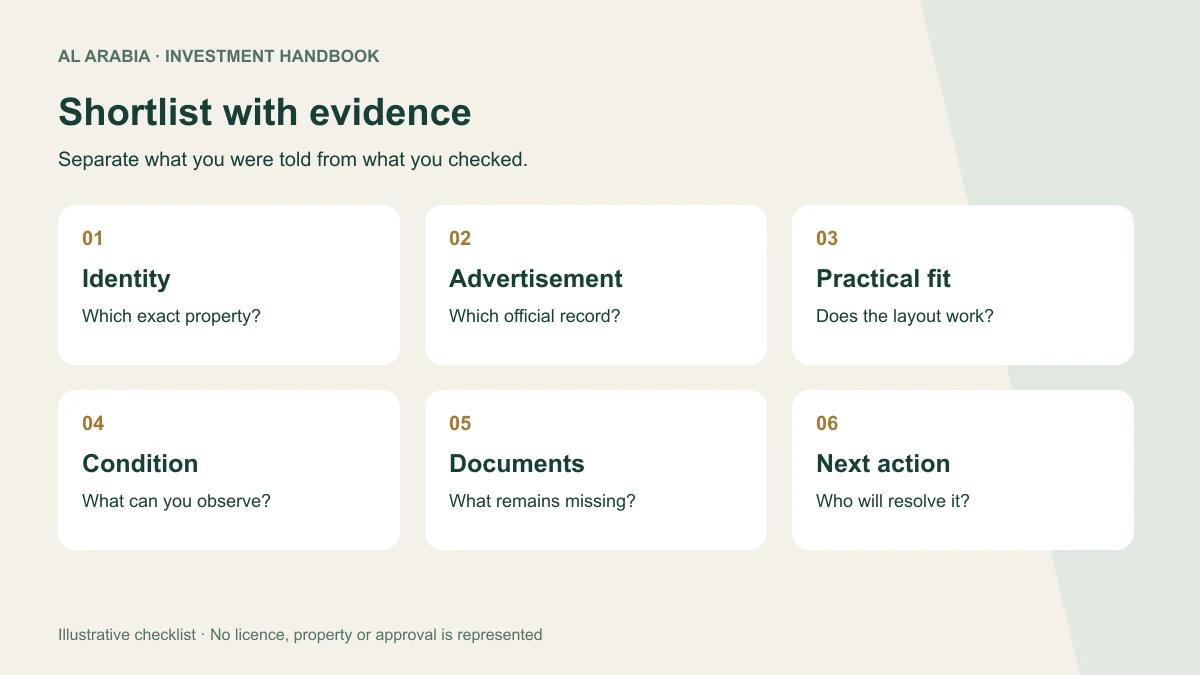
Build an evidence-based shortlist, verify listing information and prepare a practical property viewing checklist in Saudi Arabia.
A successful property search produces a manageable set of options and a clear explanation of why each deserves further attention. It does not require visiting every available home or making a decision from the most attractive photographs. This topic brings together two early tasks: checking the advertisement and people offering the property, and examining the home against your practical requirements. Both tasks should happen before a buyer relies on a sales claim or moves towards a financial commitment.
Create one record per property using a reference that remains consistent across the advertisement, viewing notes and follow-up questions. Include the city, district, building or project, unit identification and date of enquiry. Record the advertised price and the date it was checked, because an old screenshot may no longer reflect the offer. Save the original description rather than replacing it with your own summary. Differences can matter when a later conversation introduces a new feature, exclusion or payment condition.
Keep the record focused on the property. You do not need to distribute passport copies or bank statements to begin a viewing shortlist. Share information through a suitable channel only when the recipient and purpose are established. For a first enquiry, your contact details, requirements and approximate budget are usually enough to explain what you are looking for. Ask what additional information is needed and why before sending sensitive documents.
REGA provides services for checking real estate advertisement licences and FAL licensing information. Use the relevant official enquiry to establish what the record actually shows, rather than treating an image of a licence as your final check. The advertisement and the service provider are different subjects. A matching record can support one part of the enquiry, but it does not establish a property's physical condition or decide an international buyer's ownership eligibility.
Ask the contact to clarify any difference between the advertisement and the offered unit. Common practical questions concern the unit number, floor, included parking, area definition, furniture and whether photographs show the actual property or an example. Keep the answer in writing. If a material discrepancy cannot be resolved, mark the property as requiring clarification instead of moving it into the confirmed shortlist because the asking price looks attractive.
Allow enough time to see the arrival route, building entrance, shared areas and the unit itself. Bring a simple checklist and a way to record observations. If dimensions are important, ask permission to measure and agree which plan will be used for comparison. A viewing of a furnished home can conceal awkward circulation or limited storage. Consider the arrangement you would actually need rather than assuming the current presentation will work for your household.
Confirm who will attend and which areas will be accessible. Ask whether the electricity, water and cooling are available for demonstration. Where a system cannot be demonstrated, record that limit clearly. Do not operate unfamiliar equipment, enter restricted spaces or attempt technical testing without the appropriate permission and competence. A standard viewing can identify questions for a specialist; it is not a substitute for an independent technical inspection.
Record what you can see in neutral terms: a stain near a window, a door that does not close smoothly, damaged sealant or a sound from operating equipment. Avoid converting an observation into a diagnosis. A mark may have several possible causes, and a fresh finish does not prove the underlying condition. Ask for relevant maintenance records and obtain specialist advice where the issue could materially affect safety, cost or your decision.
Photograph an issue with permission and enough context to identify the room and location. Number the photographs and match them to your notes. This is more useful than collecting dozens of similar images with no description. Distinguish an observed defect from a missing document and a personal preference. Each needs a different response: inspection, evidence or a decision about whether the property suits you.
Think through a normal day at the property. Consider bringing groceries from the parking space, receiving a delivery, working from home, opening windows and using outdoor space. Check the position of neighbouring windows and the relationship between private and shared areas. The question is not whether every feature is ideal, but whether a compromise affects an essential requirement or can realistically be managed within your budget.
Where possible, revisit at a different relevant time to observe access and noise. Ask precise questions about building management, recurring charges and planned work, and request documents for material answers. Do not assume that a concierge, pool or gym will always be included on the same terms because it is available during the viewing. Establish who manages each facility and what information is available about its operation and cost.
After the visit, compare the property with your original brief before reading more sales material. Mark essential requirements as met, unmet or unconfirmed. List the evidence needed to resolve each important uncertainty, who should provide it and when you need it. A second viewing should have a purpose: checking a specific item, showing an adviser the property or confirming a change. Repeating the same tour without resolving questions rarely improves the decision.
Keep three possible outcomes open: proceed to deeper review, request more evidence, or remove the property from consideration. You are not obliged to rank an uncertain property as acceptable because you have already spent time on it. The detailed guides below help you build a shortlist that can move into contract and registration review with fewer unexplained assumptions. Keep the record available so that each later adviser can see both what was checked and what was not.
Official references provide regulatory context. The document, budget and inspection checklists are practical editorial guidance; they are not official forms or individual approvals.
Check a Saudi property advertisement, FAL licence, unit details and payment instructions before making a financial commitment.
Read more →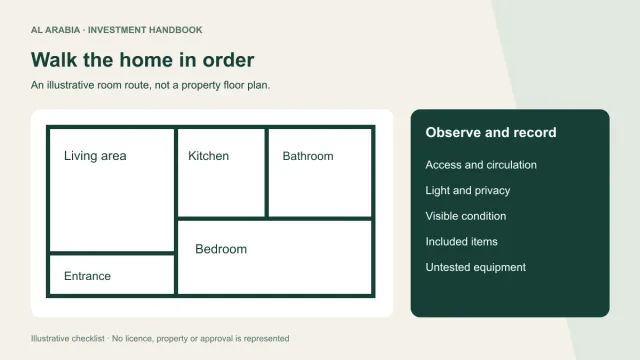
Use a room-by-room viewing checklist to record condition, access, shared facilities and unanswered questions before buying a Saudi property.
Read more →
Identify smoke-warning equipment, match its manual, coordinate checks and track records before choosing or taking handover of a Saudi home.
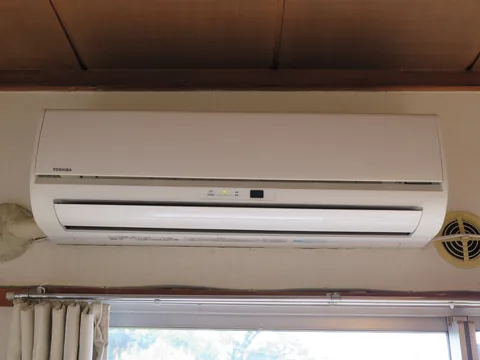
Verify Saudi AC labels, compare suitable models and installed quotations, and use clearly conditional cost arithmetic without promising electricity savings.
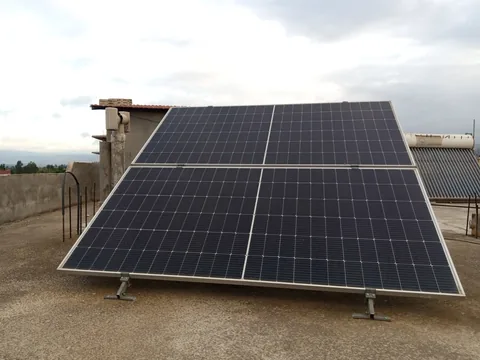
Review equipment ownership, connection records, roof interfaces, generation data and backup claims before buying a Saudi home with existing solar panels.
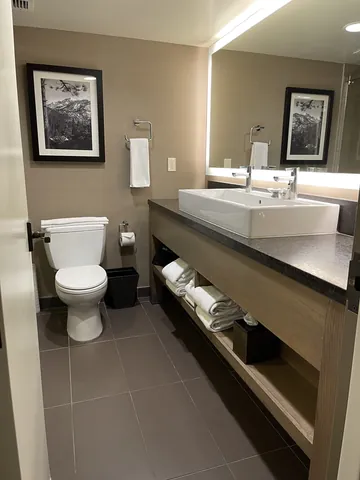
Review bathroom fixtures, permitted normal operation, drainage, ventilation, room fit and the evidence to request before buying a Saudi home.
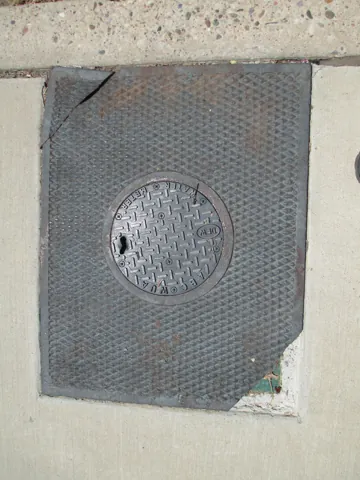
Match a Saudi home’s water-meter identity and supply arrangement to authorised records, normal-use observations and clear follow-up questions.
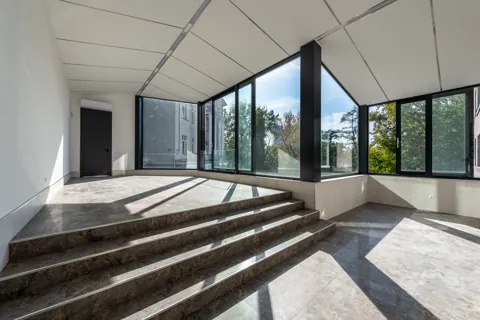
Inspect visible floor finishes, joints and room transitions in a Saudi home, recording limitations, product information and repair questions.
0 properties selected