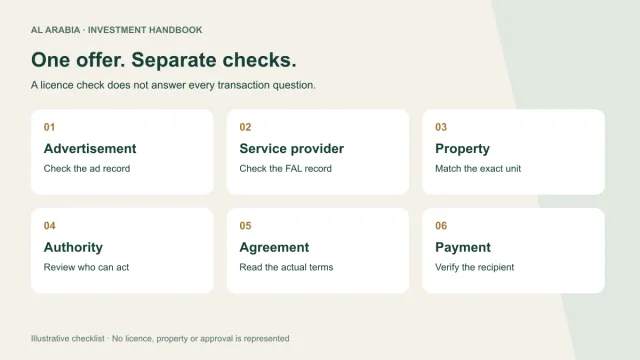
How to Verify a Saudi Property Listing and Broker Before Paying
Check a Saudi property advertisement, FAL licence, unit details and payment instructions before making a financial commitment.
Read more →
Prepare a room-by-room condition record, access inventory, operating file and follow-up schedule for property handover.
Handover is the point at which a purchase becomes a property you need to operate. Keys matter, but so do the condition record, access arrangements, manuals, outstanding work and responsibilities that follow. Prepare for the appointment using the agreed documents and the actual unit details. This guide offers a practical record-keeping method for a Saudi property handover. It does not determine whether you should legally accept a unit or replace a qualified technical inspection. Where acceptance or an unresolved defect affects your rights, obtain advice before signing the relevant document.
Gather the latest agreement, unit plan, specification schedule, approved changes and any earlier inspection report. Confirm the exact building and unit to be handed over. Keep the appointment confirmation and ask who will attend, how long access is available and whether electricity, water and relevant systems will be operating. A visit to a unit without working services cannot establish the same observations as a visit where equipment can be demonstrated. Record those limitations rather than allowing blank checklist boxes to suggest that everything was tested.
Ask in advance which documents you will be expected to sign and request copies where possible. Different forms may record attendance, receipt of keys, condition or acceptance; do not assume that similar headings have the same effect. Have unfamiliar wording reviewed before the appointment if necessary. Prepare a list of priority questions so that time is not spent rediscovering issues already raised. If an independent inspector will attend, confirm the scope and access arrangements directly with the relevant parties.
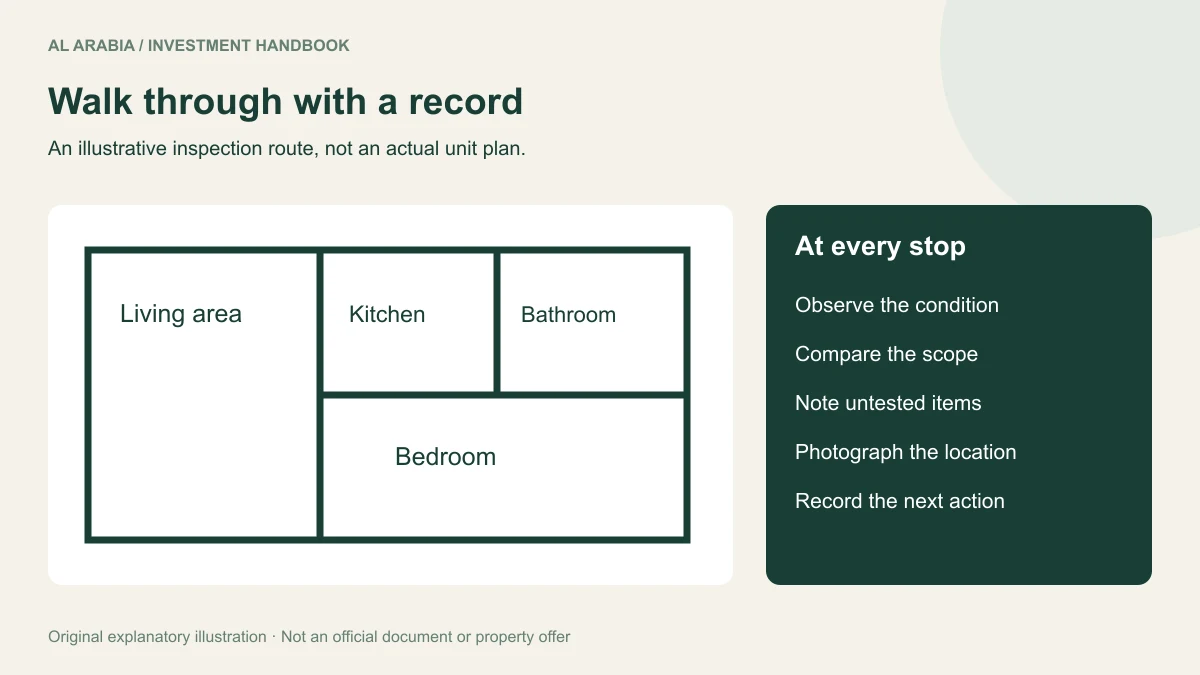
Move through the property in an orderly sequence: entrance, living areas, kitchen, bedrooms, bathrooms, outdoor areas and any included parking or storage. Use the same room names as the plan when possible. Record the date, location and nature of each observation in neutral language. For example, write visible staining below the bathroom basin rather than diagnosing a concealed pipe failure without evidence. Photographs should show both the wider location and the detail, so another person can identify the item without guessing.
Separate appearance from function. A cabinet may look complete while a door does not close properly; a fixture may be present but not connected. Note what was actually demonstrated, who demonstrated it and what remained untested. Avoid unsafe testing or opening equipment beyond your competence. Electrical, structural, mechanical and other specialist questions belong with qualified professionals. Your own checklist remains valuable because it records where a question arose and what evidence or follow-up is still needed.
Work from the final written specification, not memory of a showroom. Check the items the agreement includes, such as appliances, cabinetry, sanitary fittings, lighting or access equipment. Record model details or serial numbers where useful for warranties and servicing. If an item differs from the schedule, ask for the document approving the change and keep it with your observation. A verbal explanation at handover should not silently replace the agreed baseline in your file.
For outdoor and shared features, identify what can reasonably be checked during the appointment and what needs separate documentation. Parking allocation, storage access and building facilities may require records beyond the apartment inspection. Distinguish incomplete common areas from defects inside the unit. Ask who receives each type of issue and how progress is communicated. Do not mark a facility as available simply because it appears in a rendering or because access is expected at a later date.
Give each observation a reference number and connect it to its photographs. Add the response requested, the party responsible for responding and any agreed follow-up date. Keep descriptions precise enough that completion can be checked later. Replace vague phrases such as fix bathroom with the specific location and issue. If a technical opinion is pending, say so. A record should not imply that a repair method has been approved when all you have done is report a visible concern.
Ask how the schedule is acknowledged and how you will be notified that work is ready for reinspection. Preserve written responses alongside the original entry. Do not delete an observation when someone says it has been resolved; add the later inspection result and date. Whether an item affects contractual acceptance, payment or a remedy is a separate question for the agreement and appropriate advice. The schedule helps organise the evidence without making that legal decision on your behalf.
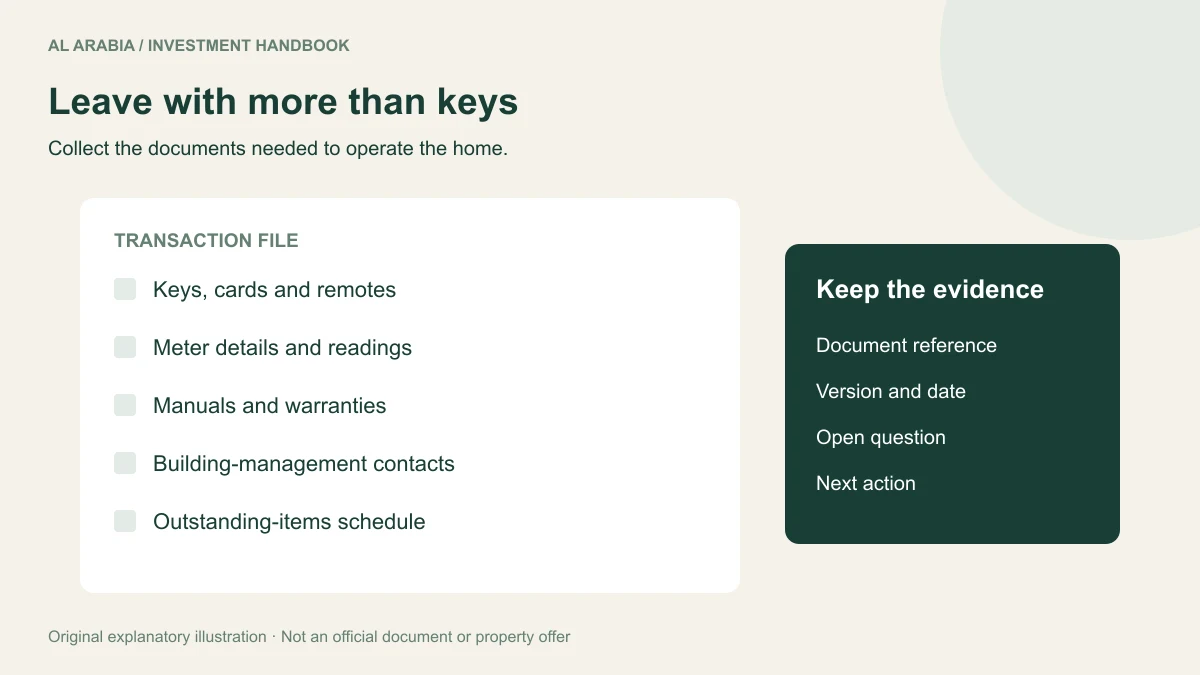
List every key, access card, remote control and code handed over, identifying the door or facility it serves. Confirm the arrangements for replacement, access changes and building security. Avoid publishing codes in a shared inspection album. Record utility meter identifiers and readings where accessible and relevant, and ask how accounts are opened or transferred. Do not assume a service is active merely because a switch or tap worked during a supervised visit.
Request manuals, warranty documents, servicing instructions and contact details for the systems supplied with the property. For each warranty, identify the provider, covered item, start date and claim process from the document itself. Ask about routine maintenance that the owner is expected to arrange. Keep these records in a dedicated operating folder. They are easier to use there than buried among sales brochures, and they help anyone later managing the home understand what has actually been supplied.
Obtain the building-management contact, emergency reporting route and practical rules affecting everyday use. Ask about moving access, deliveries, parking, waste collection and any booking process for shared facilities. If service charges apply, request the current documentation, billing cycle and payment instructions. Record questions about who maintains shared equipment separately from questions about your unit's fixtures. Clear responsibility matters when a problem crosses the boundary between a private home and a common area.
If you will not live nearby, decide who can attend follow-up visits and receive notices. Give any representative a defined scope and keep sensitive documents secure. An informal arrangement with a friend is different from an appointed property manager with a written service agreement. Check what the manager will inspect, report and authorise before assuming that outstanding work will be monitored automatically. Handover is a useful time to establish these arrangements while the relevant contacts are available.
Before leaving, reconcile the access inventory, observation schedule and documents received. Note missing items explicitly and record the next action for each. Keep copies of every form you sign and identify which version of the condition schedule was attached. If wording does not reflect what happened at the visit, seek clarification before agreeing to it. Practical pressure to finish an appointment should not lead you to sign a statement you do not understand or cannot support.
Afterwards, file the photographs, correspondence and final schedules using consistent names and dates. Set reminders for agreed follow-up visits and document any later changes. Keep the purchase agreement and registration records in the same overall property archive, but separate from routine maintenance material. A well-organised handover file gives you a usable baseline for living in, managing or eventually selling the property. Its value is the clarity of the evidence, not the number of boxes ticked on the day.
Official references provide regulatory context. The document, budget and inspection checklists are practical editorial guidance; they are not official forms or individual approvals.
Check a Saudi property advertisement, FAL licence, unit details and payment instructions before making a financial commitment.
Read more →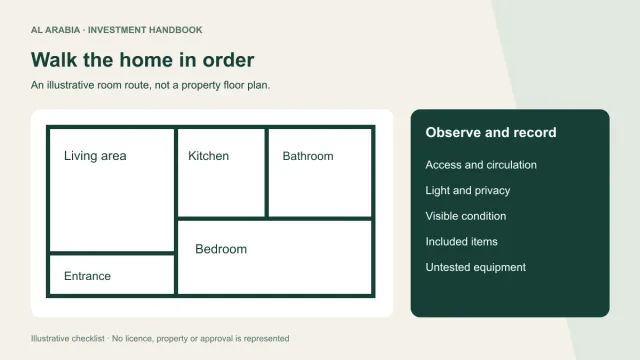
Use a room-by-room viewing checklist to record condition, access, shared facilities and unanswered questions before buying a Saudi property.
Read more →
Review the parties, property, price, conditions and completion obligations in your Saudi property agreement.
Read more →0 properties selected