A Saudi Property Handover Checklist: Keys, Condition and Records
Prepare a room-by-room condition record, access inventory, operating file and follow-up schedule for property handover.
Read more →
Organise the final payment sequence, property inspection, keys, operating documents and outstanding work.
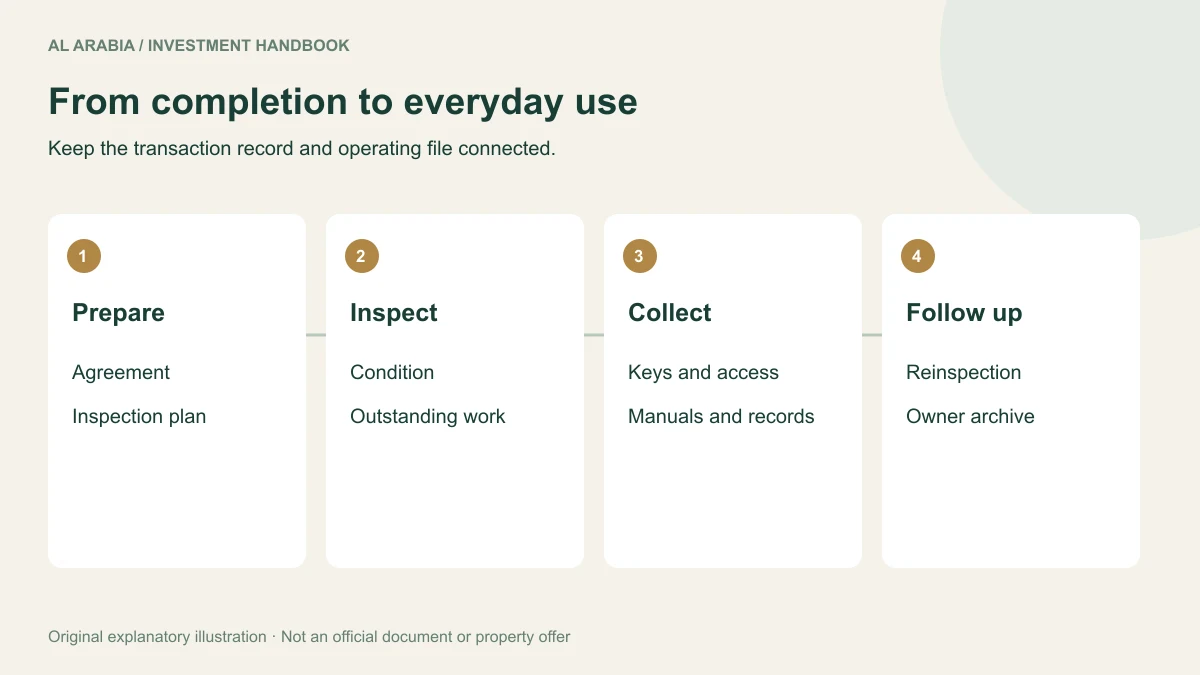
Completion and handover are closely connected milestones, but they answer different questions. Completion concerns the transaction obligations and records that establish the outcome of the purchase. Handover concerns possession, access, condition and the practical information needed to use the property. A well-organised buyer prepares both in advance. This topic helps you turn the final weeks of a Saudi property purchase into a manageable sequence rather than a single appointment at which documents, payments, keys and unresolved defects compete for attention.
Write down the proposed dates for the final document review, payment authorisation, registration activity, inspection and possession. Treat them as a coordinated plan, not as independent promises. Identify the person responsible for confirming each milestone and the evidence they will provide. If one date changes, review the later steps instead of assuming they will still happen in the same order. Keep your adviser informed when a commercial timetable changes.
Add your own practical dependencies. Travel, accommodation, movers, furniture deliveries and utility arrangements may depend on access to the property. Avoid making non-refundable arrangements on the strength of an informal estimate. Ask which date is confirmed and which remains conditional. If you are abroad, establish how a representative will attend, what authority they need and what they must report before accepting a document or acknowledging a condition.
An open issue may concern a transaction document, the physical property or day-to-day operation. Put these into separate lists so that the correct person handles each one. A missing ownership record should not be mixed with a damaged cupboard, and a question about a building access card is not the same as a concern about legal possession. Some issues may affect several lists, in which case record the connection explicitly.
For each issue, describe the required outcome in observable terms. Replace repair bathroom with a reference to the exact fitting, the reported problem and how completion will be checked. Replace send documents with the document name and the party expected to issue it. Specific descriptions make follow-up easier and reduce disagreements about whether an item has actually been completed. Keep photographs and document references attached to the relevant line.
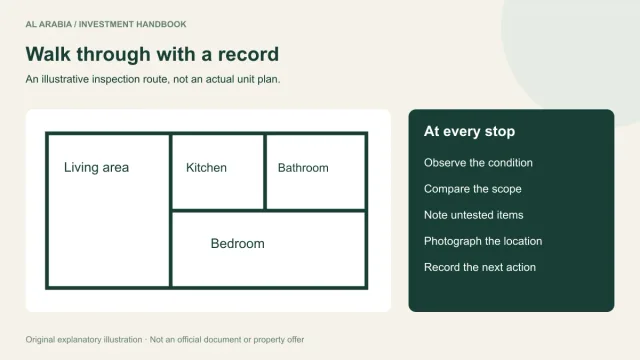
Agree who will attend the inspection and which parts of the property can be accessed. Bring the agreed specification, included-items list, earlier viewing notes and any recorded repair commitments. Where specialist inspection is appropriate, arrange it with enough time for findings to be considered. A rushed visit shortly before a payment deadline can reveal a problem without leaving a useful opportunity to address it through the agreed process.
Record limitations as carefully as observations. A cooling system that could not be operated has not been demonstrated. An inaccessible storage area has not been checked. Ask how those items will be reviewed later and what acknowledgement, if any, the proposed handover document asks you to make. Obtain professional advice before signing wording you do not understand. A form should accurately reflect what took place at the appointment.
Prepare an access inventory covering keys, remotes, cards, entry codes and any relevant digital accounts. Match each item to the door, gate or service it operates. Ask how credentials should be changed and which administrator handles building access. Record meter identifiers and readings where applicable, using photographs with permission. Clarify which service accounts need to be opened, transferred or closed and who is responsible for each action.
Request available manuals, warranties, maintenance records and service contacts for included equipment. Distinguish an appliance warranty from a promise by the seller to correct a particular issue. Ask what documents are needed if a claim is made later and where the relevant serial numbers can be found. A neatly labelled digital folder can prevent a minor maintenance problem from becoming a time-consuming search through old messages.
Obtain the current building-management contact and the process for routine requests and urgent incidents. Ask about deliveries, waste collection, moving arrangements and shared-facility access where relevant. Confirm the information available about recurring charges and how notices are issued. Do not infer a permanent service arrangement from what happened during the viewing. Record the current explanation and supporting documents for the property you have acquired.
If the home will remain vacant, plan who will check it and respond to a problem. If it will be occupied immediately, prioritise basic safety, access and essential services before decorative changes. Discuss relevant insurance questions with a suitable provider. Keep these operational decisions separate from any unresolved purchase dispute, while ensuring that the professionals advising you understand how possession and use are being handled.
At the end of handover, retain a dated record of attendees, documents received, access items, meter readings, observations and outstanding work. Circulate the agreed record through the appropriate channel and keep a copy that cannot be silently replaced. Assign a follow-up date to each unresolved item. A promise to return later is more useful when the work, responsible party and evidence of completion are identified.
Review the file again during the first month. Confirm that the records you expected have arrived, that access works and that operational questions have been answered. Keep a small issue log rather than sending disconnected messages about each concern. The detailed handover guide in this topic provides a practical appointment sequence. Use it together with your contract and professional advice so that the transition from buyer to owner is documented and understandable.
Official references provide regulatory context. The document, budget and inspection checklists are practical editorial guidance; they are not official forms or individual approvals.
Prepare a room-by-room condition record, access inventory, operating file and follow-up schedule for property handover.
Read more →0 properties selected