
Tabuk Hejaz Railway Station: Read Its Heritage
Understand Tabuk Hejaz Railway station through buildings, rolling stock and dated sources, with a practical method for reading its heritage.
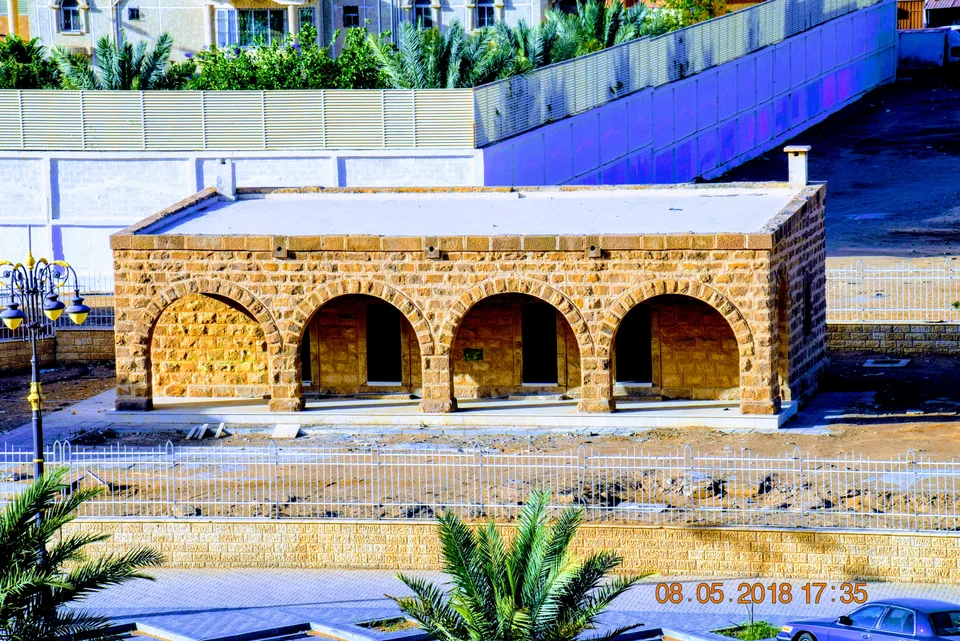

Tabuk’s Hejaz Railway station is best understood as a group of buildings within a historic transport network. Its interest extends beyond an old train: the site invites you to consider how journeys, waiting, maintenance and the city around a station fit together. This guide explains how to read the surviving architecture and photographed exhibits while separating documented history from observations that need further evidence.
The station belongs to Tabuk City in northwestern Saudi Arabia. It should not be confused with the Hejaz Railway Museum in Madinah, or with a functioning departure point for a present-day rail journey. Historical descriptions and photographs help explain the place, but they do not confirm today’s opening hours, accessible areas or available displays. Those practical details need checking with the current operator before a visit.
Place Tabuk within the railway story
Saudipedia’s Tabuk City reference describes the station as a group of buildings and records the arrival of the first train in 1906. For wider context, its Railway Museum reference, dated 8 February 2021, describes construction beginning in 1900 and inauguration of the railway in 1908. These dates describe different stages: work on a network, arrival at an intermediate place and a later inauguration. They are not competing answers to one identical question.
A useful way to read the chronology is to write the event beside the year. “Train reaches Tabuk” communicates more than a bare “1906,” because it identifies the geographic scope. A station can become usable before a longer route is inaugurated. Conversely, the age of a route does not establish the construction date of every wall, roof or exhibit that survives at one station.
The official references connect the historic line with travel between Damascus and Madinah and with pilgrimage. Use that relationship to orient your reading, rather than treating the railway as an isolated monument. A line has direction, intermediate stops and places where people or equipment pause. Start with our Tabuk city and mountain guide for wider geographic orientation. The buildings visible at a stop are therefore evidence of a connection to a much larger system.
Start with the arrangement of buildings
A Saudi Press Agency report about Tabuk heritage projects, published in November 2018, describes station buildings arranged in a straight line parallel to the railway, and refers to locomotive storage buildings. This is a dated description of the complex and associated heritage work, rather than a current site-access announcement. It offers a useful starting question: how does the arrangement relate to a route passing through it?
If you can see the site from a permitted public position, or study a reliably identified photograph, look first at the larger relationships. Note whether buildings appear aligned, separated or grouped. Then examine entrances, rooflines and the spaces between structures. Recording those features before focusing on decoration helps you understand a complex whose purpose involved movement and stopping.
Do not turn every spatial observation into a historical function. A long wall may look suitable for a store, and a broad opening may appear compatible with moving equipment. Those are hypotheses until a plan, label or authoritative account identifies the structure. A strong note says “wide opening visible on this elevation”; a weaker note immediately names a workshop without supporting evidence.
Try an original three-part sketch: draw the visible buildings as simple boxes, mark the direction associated with the line, and add arrows only for movements you can actually observe or verify. Leave uncertain connections as questions. The aim is not to reconstruct an engineering plan from a visitor’s glance. It is to distinguish the arrangement you can see from the operating arrangement you still need to document.
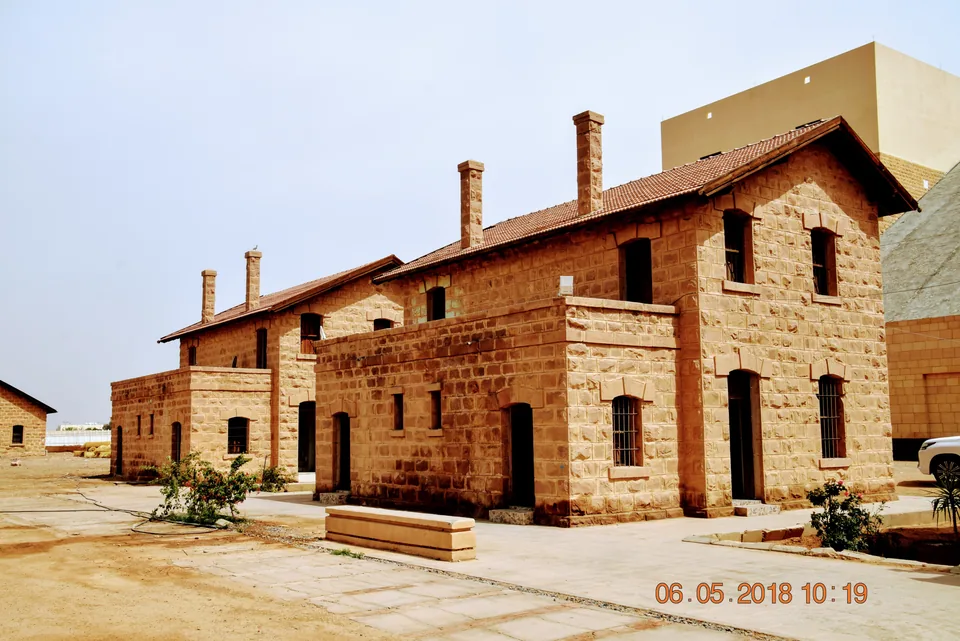

Read the stone elevations carefully
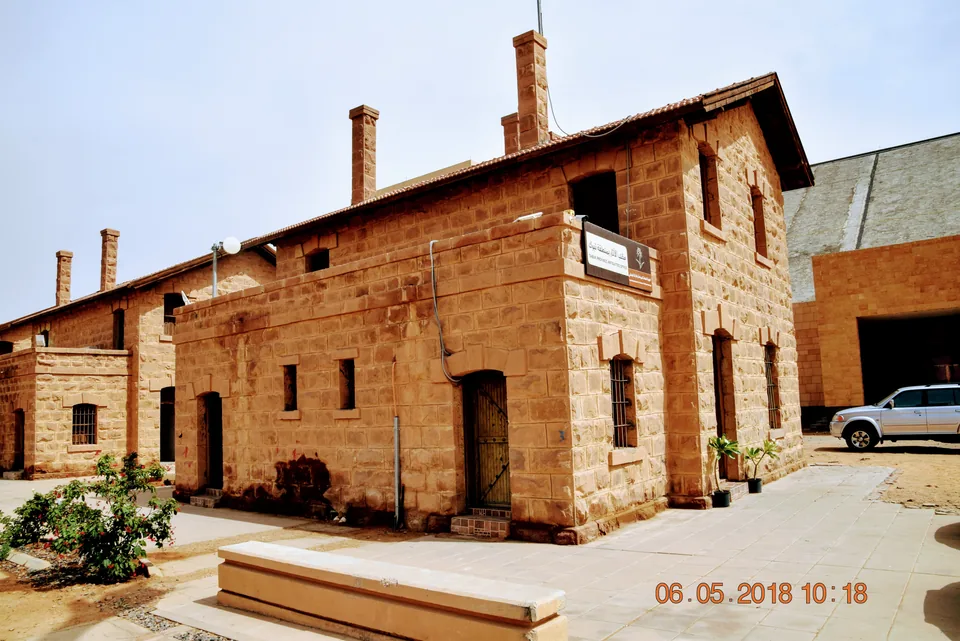
The exterior photographs here show stone buildings with openings, roof edges and changes in volume. These are useful visual records, not a guarantee that every visible material is original. Begin with a plain description of the photographed surface: the outline of an opening, the spacing between windows, or the relationship between a taller section and a lower adjoining section.
Compare two parts of the same elevation. Are the openings similar in size? Do they repeat regularly? Does the wall continue around a corner, or does another structure interrupt it? Such questions make the image more informative without requiring a claim about the designer’s intention. Repetition is visible; the reason for repetition may require architectural documentation.
Our guide to Najdi architecture at Ushaiqer offers a useful comparison in observation method, rather than a claim that the places share one building tradition. Ask how each guide distinguishes visible form from documented material and use. Comparing methods lets you appreciate differences between places without forcing all Saudi heritage into the same architectural story.
Treat the displayed train as an object with a record
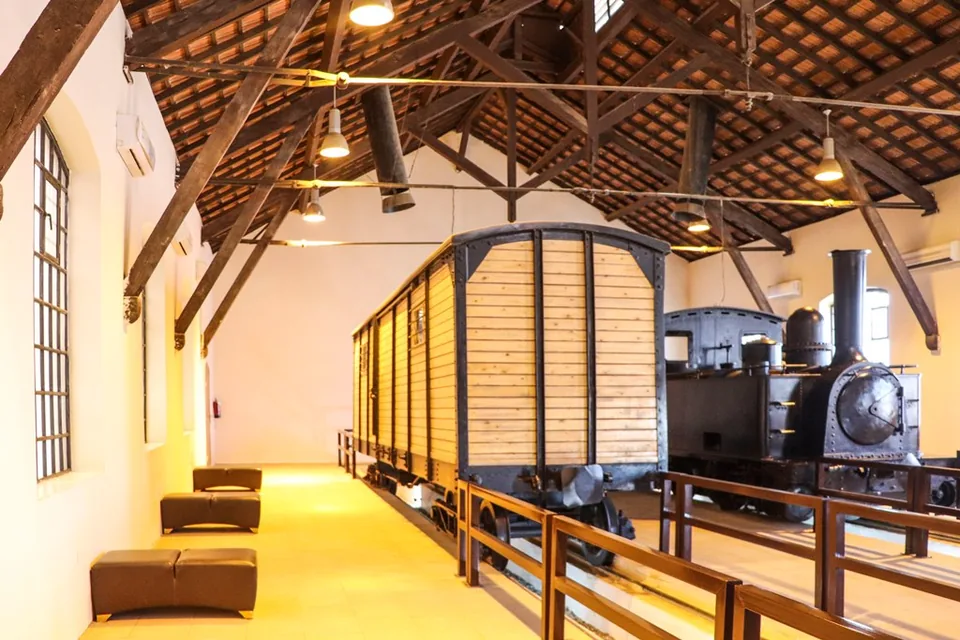
The interior photograph identifies rolling stock at the Tabuk station museum. It shows a carriage and a locomotive within an exhibition space. Their visible arrangement is evidence of how they were photographed on display. It does not, by itself, prove that these exact vehicles always travelled together or that every component retains its original form.
Start with the whole object, then move to a detail. On a carriage, note the shape of its body, the relationship between body and wheels, and the visible openings. On a locomotive, look at what is actually identifiable in the image. Avoid assigning a builder, model, manufacturing year, original owner or particular historic journey unless the object’s label or a reliable collection record supplies it.
A productive museum question is “What is the documented identity of this object?” Follow it with “What work has been done to it?” An object can carry a history of use, repair, relocation and display. Those stages matter because a polished appearance is not the same as a complete provenance record. A restored object can be informative while still requiring explanation of what was replaced or presented for exhibition.
Use the approach in our Saudi National Museum object-reading guide: keep appearance, label information and interpretation in separate notes. Here, that might mean recording a visible carriage feature, copying the precise identity stated on an available label, and then asking how the object relates to Tabuk’s railway story. Each step adds evidence without pretending the previous step answered everything.

Look for the human work behind movement
A railway heritage site can encourage a useful shift from “Which train is this?” to “What kinds of work would a journey require?” As a general thinking exercise, distinguish the movement of vehicles from the preparation of equipment, the handling of information and the needs of passengers. These categories help organise questions; they are not a staffing chart for historic Tabuk.
For example, a traveller needs to understand where to wait and which journey to take. An operator needs information about when a vehicle can move. Equipment needs attention before and after use. If a label, historical photograph or collection record identifies a particular local task, you can connect it to one of those questions. Without that evidence, keep your description at the level of a possible function.
This approach also prevents the station’s social history from shrinking to a machine photograph. Ask what evidence survives about the people who travelled, worked or waited. Their experience might be documented through objects, written records or photographs. An empty room in a present-day image cannot tell you how crowded it was on a historic day, or which groups of travellers used it.
When discussing pilgrimage, retain the scope established by official sources. Do not invent a named passenger’s story or describe a particular arrival as though you witnessed it. A clearly labelled imagined question can support learning, but an invented anecdote cannot substitute for reporting. The most useful outcome is a better question for an archive, museum label or guide to answer.
Separate the operating site from the heritage site
The station has more than one time layer. There is the period when railway-related activity took place, the later history of surviving buildings and objects, and the way the place is interpreted for a contemporary audience. A single photograph may contain evidence from several layers. It is therefore worth asking which layer each statement concerns before accepting a neat chronological story.
The 2018 Saudi Press Agency report discusses heritage and museum projects. Read its date as part of its meaning. It establishes what was reported at that time; it does not settle the current completion, availability or visitor operation of every element mentioned. Similarly, an official tourism description can identify an attraction without confirming that all its spaces are accessible on the day you intend to arrive.
Restoration introduces another question: what is being preserved, repaired or explained? You may see a roof that looks intact, a cleaned wall or an object arranged beside a visitor barrier. Those observations can be recorded accurately. Identifying the date and extent of the work needs conservation records or an authoritative explanation. “Well preserved” is too vague if it obscures that distinction.
Keep similar railway names and places distinct
Hejaz, Hijaz and Hedschas are spellings you may encounter in English or other-language records. Variations in a name can make searching harder, but the larger risk is merging different stations into one place. Always record the city beside the railway name. The same place-identification habit helps when reading about AlUla Old Town and Hegra, two other distinct heritage settings. “Hejaz Railway Museum, Madinah” and “Hejaz Railway station, Tabuk” describe different geographic subjects.
This distinction matters when reading the Saudipedia museum reference. Its museum location and opening history concern Madinah. They should not be transferred to Tabuk simply because both places are associated with the same historic railway. A correct fact attached to the wrong place can be more misleading than an obviously incorrect date.
The same care applies to photographs. A locomotive photographed elsewhere along the route cannot serve as proof that the depicted vehicle is at Tabuk. A filename, source description and visible context should agree before you assign a location. If a record is incomplete, use a more limited description or choose a better documented photograph rather than resolving the ambiguity by guesswork.

Use a compact evidence notebook
You can turn these observations into a small record without making the visit feel like an examination. Choose one building relationship and one displayed object. Give each a short entry with four elements: what you saw, the source of any factual identification, the question it raises, and what would answer that question. This is more useful than collecting a long list of unverified details.
For a building, an entry might begin “The photograph shows a row of openings along a stone elevation.” The sourced statement could refer to the official description of the complex’s alignment. The unresolved question might concern the building’s original use. A labelled historic plan or conservation record would be a suitable next source; resemblance to another station would be a comparison, not confirmation.
For rolling stock, begin with a visible feature rather than an assumed model. Add the identity only if a collection record supplies it. Ask whether the interpretation concerns manufacturing, railway service or later display. Those are different kinds of information, and a good notebook makes it easy to see which one is supported.
Prepare a visit around confirmed access
This is a heritage interpretation guide reviewed on 3 October 2026, not an operational timetable. Before travelling, consult the official Visit Saudi station listing and seek current confirmation of opening arrangements, ticketing if applicable, accessible areas and any temporary restrictions. Do not treat an old travel post or the photographs here as that confirmation.
If step-free access or another specific arrangement matters, ask about the complete route from arrival to the spaces you want to see. A photograph of a broad courtyard does not establish accessible entrances, interior circulation or available assistance. Confirm the practical requirement directly, and plan around the answer rather than assuming that a heritage attraction has one uniform access condition.
During an authorised visit, follow the site’s boundaries and instructions. View equipment from permitted positions; do not climb exhibits, touch surfaces where this is prohibited, or enter closed areas to recreate a photograph. For photography, check the rules and respect other visitors’ privacy. An informative image needs a reliable subject and context, not access to every part of the complex.
Begin with the alignment of the buildings, then read one exterior and one object closely. Finish by checking whether your notes distinguish the historic network, this station and its later presentation. Continue through the About Saudi Arabia collection for other ways to understand places through architecture, landscapes and material evidence. That sequence leaves you with a coherent account of Tabuk’s railway heritage and a clear record of what still needs confirmation.
Sources and review
- Saudipedia: Tabuk City — reviewed 3 October 2026. Official Saudi reference verifies city location, station buildings and first train arrival in 1906; no current access assurance.
- Saudipedia: The Railway Museum — reviewed 3 October 2026. 8 February 2021 reference: construction began in 1900; inauguration in 1908. Its museum-specific details concern Madinah, not Tabuk.
- Saudi Press Agency: Tabuk heritage projects — reviewed 3 October 2026. November 2018 report: buildings aligned parallel to the railway and locomotive storage. Historical reporting does not confirm current operation.
- Visit Saudi: Tabuk Station in Hejaz Railway — reviewed 3 October 2026. Official attraction listing and access-information reference; readable content limited. No current hours, tickets or accessible facilities asserted.