
Ushaiqer Heritage Village: Read the Najdi Architecture
Explore Ushaiqer Heritage Village through earthen walls, courtyards and palms, with careful observations and practical visit-planning questions.
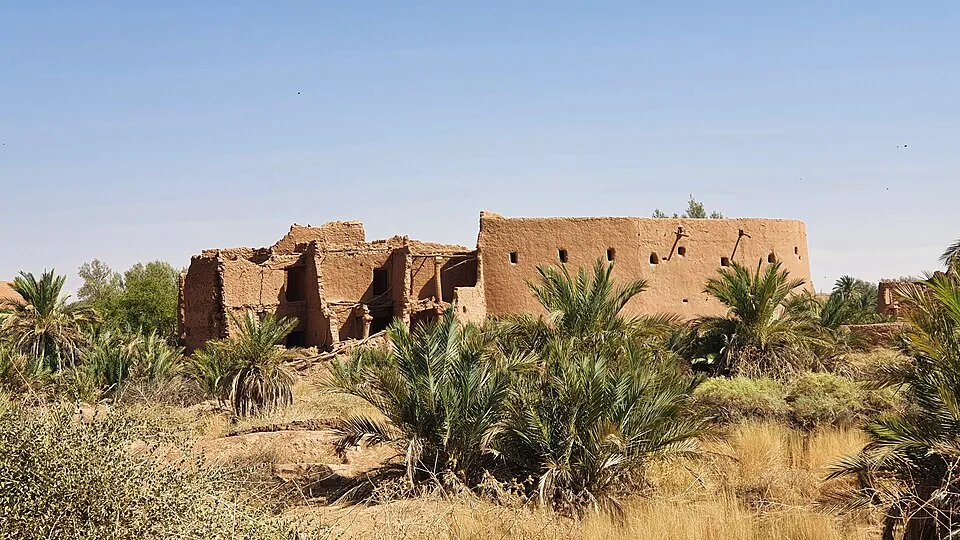

Ushaiqer Heritage Village is a place to explore Najdi architecture in Saudi Arabia's Riyadh Region through walls, openings, courtyards and the relationship between buildings and palms. A rewarding visit starts with a few questions about the spaces you can see, rather than a race to collect photographs. Look at how a passage changes the view, how a courtyard connects rooms and how older fabric differs from a repaired surface.
Visit Saudi's Northern Trail guide, reviewed on 3 October 2026, includes Ushaiqer Heritage Village as a destination for traditional life and architecture. English spellings vary, including Ushaiger. Confirm the heritage village itself when planning a route; a similarly named shop or market elsewhere is not the same destination.
Begin with the setting
The photograph above shows earthen buildings among palms at Ushaiqer. It provides a useful starting point: the village is more than an isolated architectural object. Built spaces, planted areas and the gaps between them all contribute to how a visitor reads the place.
Before entering an accessible area, pause to identify a clear route back. Notice where walls frame a passage and where the view opens out. This small orientation exercise helps you connect individual buildings to a larger pattern instead of remembering only disconnected doorways.
The Riyadh Region introduction provides the wider geographic context. A village visit offers a different scale from a day spent among central Riyadh's large roads and landmarks. Plan enough time for that change of pace, with a transport arrangement you can rely on for the return journey.

Read a wall before assigning it a date
Colour and texture can reveal differences between surfaces, but an appearance alone cannot date a building. A smoother patch may be a repair, a protective finish or another intervention. A weathered section may show exposed material, yet it does not tell you exactly when the surrounding structure was built.
Ask what is directly visible: the depth of an opening, the transition between finishes, the relationship between a door and an adjoining wall. Then separate those observations from questions that need a guide, label or conservation record. This makes the visit more interesting because uncertainty becomes something to investigate.
Avoid pressing, scraping or removing material to identify it. Photograph from a permitted position and use the image to formulate a question. The visible buildings deserve care regardless of whether a particular section is original, repaired or reconstructed.
Follow the transition into a courtyard
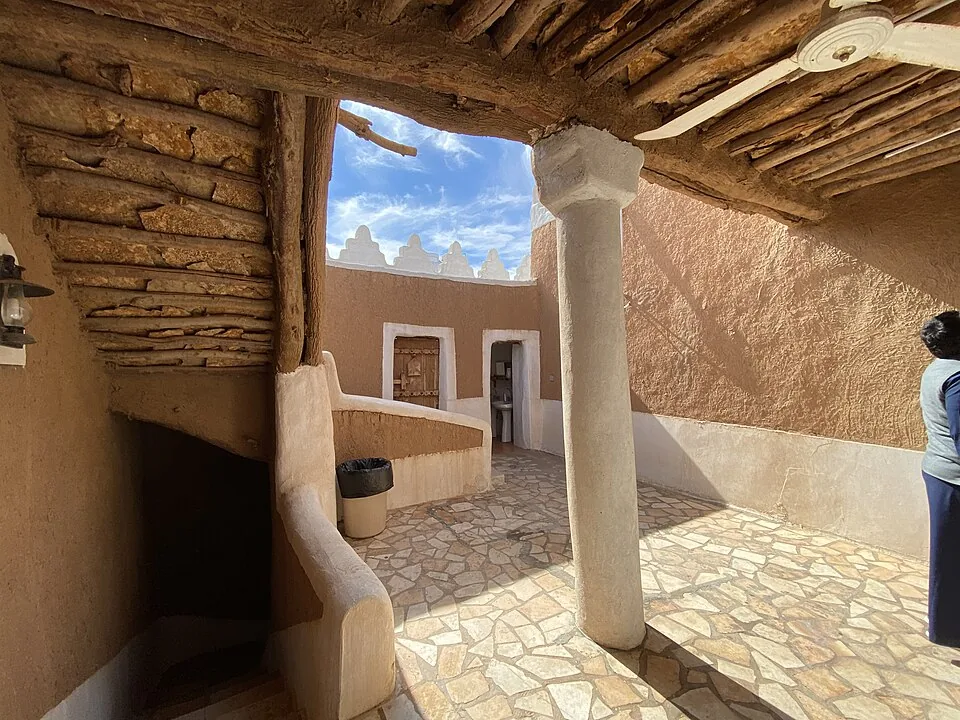
The second photograph shows a courtyard space at Ushaiqer with columns, a timber roof structure and earthen surfaces. Compare the covered edge with the open centre. They create different conditions for standing, moving and looking toward adjoining rooms.
An accessible courtyard can help a visitor think about a house as a sequence of spaces. Instead of treating every room as a separate exhibit, follow the thresholds: where does an entrance lead, which views are direct, and which are screened by another wall or turn? These are observational questions, not a reconstruction of how every household lived.
Look upward only from a safe, permitted position. Timber members visible in a photograph can help explain the form of a covered area, but identifying species, age or structural condition requires specialist evidence. Do not climb walls, enter an unstable building or use a roof simply because it offers a better photograph.
Use the heritage guide as a starting list
Visit Saudi's guide also lists Bab al-Aqla and several traditional houses and museums in its Ushaiqer section. The guide describes the gate as part of the historic wall and identifies attractions associated with local heritage. These references are useful starting points for further enquiry, rather than a promise that every named stop is accessible on the day you arrive.
Select one or two interests before departure: architecture, household objects or the relationship between village buildings and their setting. Confirm which locations can actually be visited and whether a local guide or host is available. A short, well-understood route can be more satisfying than a long list of closed doors.
Treat an open doorway carefully. A building may be privately used, temporarily closed or accessible only with permission. Ask before entering, and respect signs and the direction of people responsible for the site. The presence of older architecture does not make every space a public exhibit.
Compare Ushaiqer with other Najdi places
The At-Turaif earthen architecture guide offers a useful next comparison. Keep each place's history and status separate. Shared interest in earthen architecture does not mean two sites have the same designation, development history or visitor arrangements.
For a different architectural question, read about Al Masmak Fortress in Riyadh. Think about how the purpose of a fortress shapes an entrance or wall, then compare that with the domestic spaces visible at Ushaiqer. The point is to sharpen observation, without assigning a village house the function of another building.
After visiting, organise a few photographs by subject: wall texture, a threshold, a courtyard and a wider view. Add a sentence explaining what each image shows and a separate sentence stating what remains uncertain. This turns a collection of pictures into a record you can revisit and discuss.
Plan for conditions and considerate photography
Check current weather, daylight and access arrangements before leaving. This article does not establish opening hours, ticket prices, present road conditions or the availability of a particular museum. Those details can change and should come from the relevant operator or host near the visit date.
Wear footwear suitable for the surfaces on your confirmed route, carry water and agree a meeting point if travelling together. If steps, uneven surfaces or narrow passages affect your group, ask about the actual accessible route beforehand. Do not assume the experience is step-free from a tourism photograph.
Ask before photographing people or entering a private courtyard. Keep passages clear while taking pictures, and leave objects and building surfaces untouched. A careful visit preserves the place and usually produces better observations: you spend time understanding a visible detail instead of looking for the most dramatic angle.
Ushaiqer is especially rewarding when visited with curiosity about ordinary architectural choices. Bring a short list of questions, verify access and leave room for what the buildings themselves can show you.
Sources and review
- Visit Saudi: Northern Trail guide — reviewed 3 October 2026. Official guide's Ushaiqer section verified through indexed PDF text: village, historic Bab al-Aqla and traditional houses/museums. Direct PDF retrieval unavailable in web tool; no current hours, price, access or detailed historical date asserted.
- Licensed photographs of Ushaiqer — reviewed 3 October 2026. Geographic subject corroboration; architectural observations are original visual interpretation, not dating or structural assessment.