

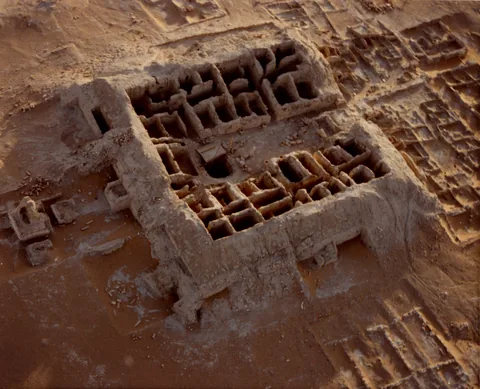
Al-Faw: Reading an Ancient City and Its Oasis
Read Al-Faw through its city, oasis and trade setting, with verified heritage sources and practical ways to distinguish evidence across periods.

Explore Riyadh's Saudi National Museum through objects, maps and exhibition context, with original observation exercises and official visitor guidance.
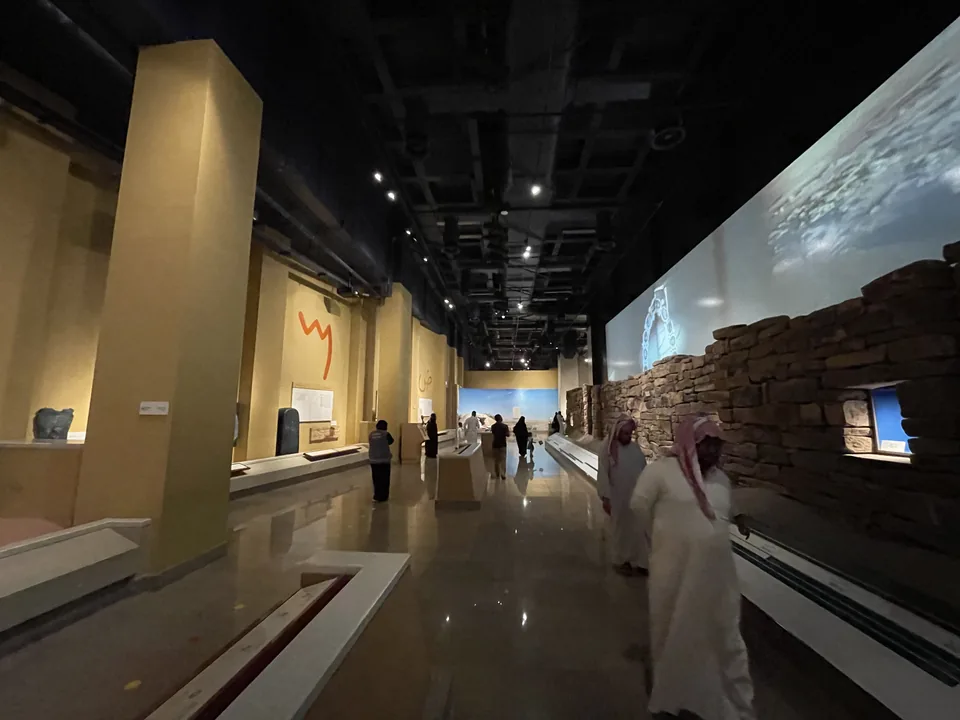
The Saudi National Museum in Riyadh offers a way to understand the Arabian Peninsula through objects, historical interpretation and the places shown on exhibition maps. A useful visit begins with a question: what can a particular object tell us, and what still depends on its label or the wider exhibition? That approach turns a walk through galleries into a clearer understanding of Saudi Arabia's cultural setting.
The museum is in Al Murabba, within the King Abdulaziz Historical Center. Its official introduction describes archaeological and multimedia collections and a chronological journey from ancient history to the Saudi period. This guide suggests ways to read that presentation; it is not a fixed gallery itinerary or a promise that every photographed object is currently on display.
The museum's official homepage introduces themes including Man and the Universe, Arabian Kingdoms and the Pre-Islamic Era. These are different scales of history. Geological change, an archaeological settlement and a political event require different kinds of evidence and different timelines.
At the beginning of a section, find its place names and dates before concentrating on individual objects. Ask whether a map covers today's Saudi territory, the wider Arabian Peninsula or a particular settlement. A modern national border should not silently become the boundary of an ancient exchange network. Follow the exhibition's own map and explanation rather than supplying a boundary from memory.
Our Riyadh city guide provides the present-day setting. Keep that orientation separate from the historical territory described inside a gallery. The museum can help connect the two, but a historical label and a modern city guide answer different questions.
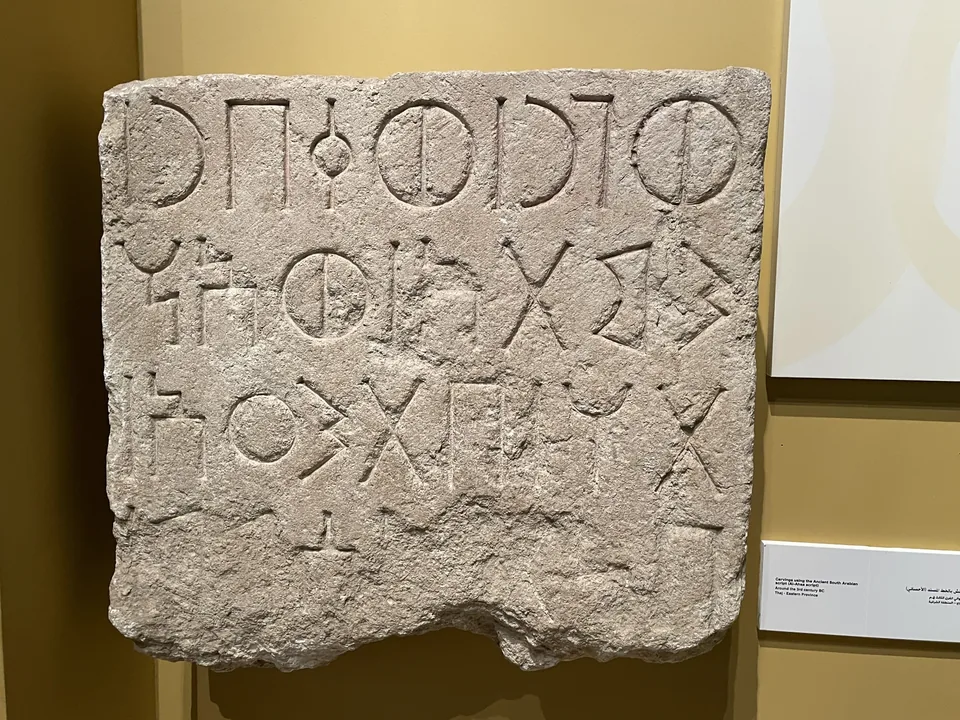
Choose an object with a label you can comfortably read. Start with four details: what it is, where it was found or associated, the date or date range assigned to it, and the explanation of its use. Note when a date is approximate. A range is information about uncertainty, not an invitation to replace it with a precise year.
Then look at the object itself. A vessel's opening, an inscription's arrangement or a worn surface can prompt questions, but visible features alone do not establish who made it or how it was used. Separate your observation from the museum's interpretation. Writing “rows of carved marks” records something visible; naming a script or translating it requires the label and reliable explanation.
The museum's FAQ says introductory and informative panels are available in Arabic and English, and staff can help visitors seeking English guidance. Use that support when a term is unfamiliar. If the label does not answer a question, keep the question open rather than turning a guess into a historical fact.
An exhibition combines evidence with ways of explaining it. A display may include an object, an image of another object, a reconstruction or an audiovisual account. Read the wording beside each element to establish what you are looking at. Do not assume that everything in the same scene has the same date or evidential status.
A useful exercise is to describe one display in two short sentences. First record what the object label actually identifies. Then describe how the surrounding presentation helps explain it. For example, an accompanying map might show the named place in a broader landscape; it does not independently establish the object's origin if its own caption says something else.
This distinction matters outside museums too. Our Hail rock-art landscape guide considers cultural evidence in its physical setting. A gallery can make objects easier to compare, while a site visit offers a different relationship with terrain and place. Neither experience replaces the other's context.
Instead of trying to remember every case, follow a question across several displays: how did people represent a place, record information or use an everyday object? Compare only what the labels support. Similar shapes can invite comparison, but resemblance alone does not prove that communities shared a single identity or that an object travelled between them.
Keep the dates visible in your notes. An ancient settlement, an early Islamic display and a Saudi-period account may appear along one visitor route, yet they describe distinct historical settings. A museum's chronological sequence is a way of organizing the story, not evidence that all objects belong to one continuous episode.
For a more focused Riyadh history reading, continue with Al Masmak Fortress. Its building and historical account offer a narrower lens than the National Museum's broad cultural presentation. Compare the questions each place helps answer rather than treating the two visits as interchangeable attractions.
The museum's official architectural account identifies Raymond Moriyama and describes inspiration from Najdi buildings and the colours and forms of the dunes around Riyadh. That gives a reason to look at the museum's exterior as part of the visit. It is a designed contemporary setting for historical interpretation, rather than an ancient building merely containing a collection.
Notice the relationship between a wall, a shaded approach and the surrounding open space. Describe what is visible without assigning an architectural feature to a particular historical period unless the museum explains that connection. Our At-Turaif earthen-architecture guide offers a useful comparison with a heritage district, while keeping its history and materials distinct from the museum's design.
Review the museum's current visitor guidance before travelling. Checked on 3 October 2026, it warns that hours can change for exceptional periods and that some gallery areas use sound or visual effects. Confirm the arrangements relevant to your group instead of relying on a copied timetable or assuming every area suits every visitor.
The same visitor guidance asks people not to touch exhibits and permits personal photography without flash, with additional equipment subject to restrictions. Follow current instructions and respect other visitors' privacy. Leave with one well-supported connection between an object, its place and its period, plus the questions you still want to explore. That is a useful foundation for reading Saudi history beyond the museum doors.
Explore About Riyadh Region, Saudi Arabia
Read Al-Faw through its city, oasis and trade setting, with verified heritage sources and practical ways to distinguish evidence across periods.
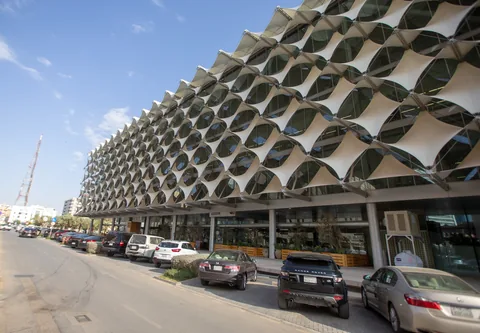
Read King Fahd National Library through its patterned facade, retained earlier building and Olaya setting, with original architectural observation exercises.
0 properties selected