
Buraydah Date Markets: Understanding Qassim Through Food
Understand Buraydah date markets through Qassim culture, product comparisons, respectful questions and practical event and travel planning.

Use the market to understand the region
Buraydah's date markets offer a practical way to understand Qassim through a product that connects farming, trade, food and everyday conversation. The rewarding visit is more than buying a box or photographing a display. Ask how the product is identified, compare the form in which it is sold and notice the work that brings it from cultivation to the market. Respectful questions can turn a short stop into a clearer understanding of the region.
Visit Saudi's Qassim destination page highlights the region's date culture and Buraydah's date carnival. This article is a cultural observation guide, not a report of current market prices or a guarantee of event access. Check the current organiser's details for dates, opening arrangements and location before travelling for a particular festival or market experience.
Keep the city, market and event distinct
Buraydah is a city; a market is a particular place or trading arrangement; an annual event has its own schedule and programme. A destination photograph or a reference to the carnival should not be used to assume that every visitor can see the same activity throughout the year. Ask which market or event a recommendation actually means and obtain the specific arrival point.
The Buraydah city guide provides orientation within the city, while the Qassim Region guide offers a wider geographic view. Use those different scales when planning transport. A regional destination label is not a substitute for directions to the site you intend to visit.
If travelling for an event, verify the programme close to departure. A listing may describe the overall event period while particular activities occur only at certain times. Do not promise an auction, farm visit or tasting from a general carnival description. Confirm the activity with its organiser and check whether registration or a separate booking is needed.

Compare products with specific questions
Ask the seller to identify the variety and explain the product's current form, packaging and storage guidance. If you do not understand a term, request a plain explanation rather than guessing from appearance. Similar-looking displays can differ in the way they are prepared or presented. Price alone does not explain those differences.
When comparing two offers, align the quantity and packaging. A price for one box cannot be compared with a price per kilogram until the weight and product are clear. Record the seller's description rather than turning a personal preference into a claim that one variety is universally best. Taste and intended use are legitimate parts of the choice, but they are not an objective regional ranking.
Ask before sampling or photographing. Follow the seller's arrangement and do not handle produce simply to stage an image. If a display is part of a commercial working area, avoid blocking customers or activity. The visit should respect the market as a place where people earn a living, not treat it as a set arranged for visitors.
Notice the work around the produce
Look at sorting, packaging, loading and the movement of goods where it is appropriate to observe. These details reveal a different side of food culture from the finished plate. Ask which parts of the process the seller can explain and avoid assuming every stall grows the product it sells. A trader, packer and farm operator may have different roles.
If a farm experience is offered, check the actual operator and activity. A visit to a farm and a visit to a market answer related but different questions. Do not infer access to agricultural land from the fact that a seller talks about cultivation. Follow any booking, hygiene and site instructions, and keep private working areas off your route unless invited.
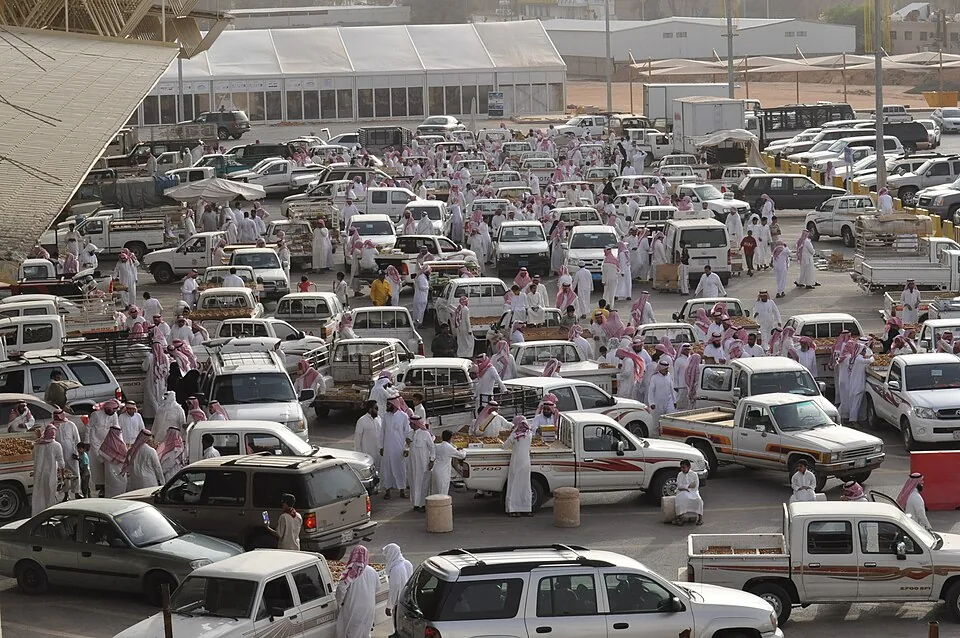
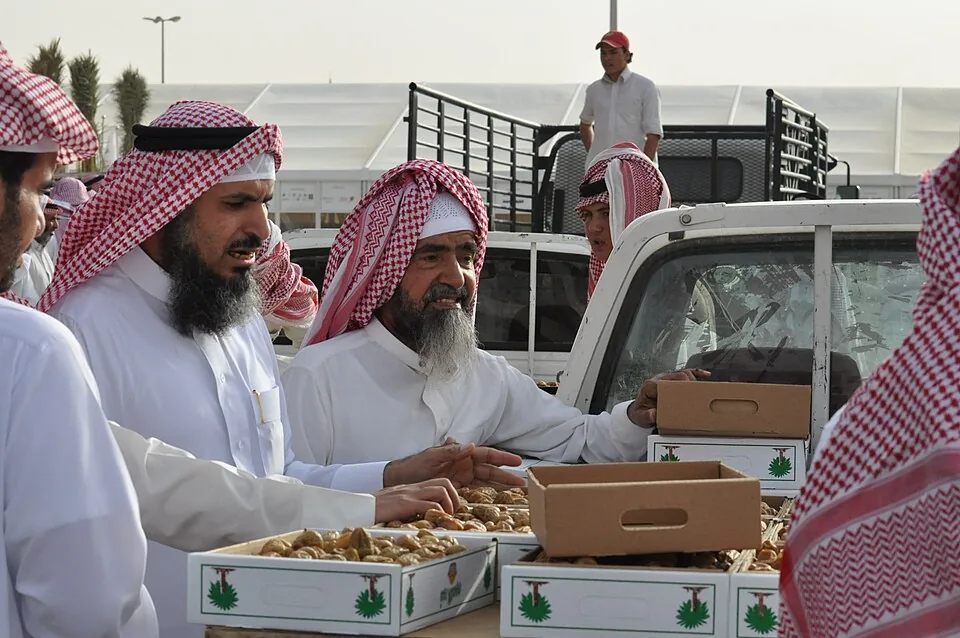
The photographs accompanying this article show date trading at Date City in Buraydah, including vehicles, traders and trays of produce. They illustrate a market setting rather than the farm origin of a particular box. Use the images to understand the trading scene, then ask the seller about the product you are considering. Historical market photographs do not establish current opening arrangements or prices.
Plan purchases for your journey
Ask about appropriate packaging and storage for the product you choose. Consider the time between buying and reaching your destination, and avoid assuming one method suits every preparation or travel condition. If taking food across a border, verify the destination's current import and declaration rules through its official authorities. A purchase permitted in the market does not establish permission to carry it into another country.
Keep receipts and product information where useful. If buying gifts, choose a quantity and package the recipient can use rather than selecting solely by visual presentation. Ask how the seller recommends serving or storing the product, and distinguish that practical guidance from unsupported health or medical claims.
Fit the visit into a wider Qassim trip
Allow enough time for the market without making the whole itinerary depend on one unconfirmed activity. The travel and transport guide helps with wider Saudi journey planning. Check current transport and the actual site before allocating a fixed connection immediately after the visit.
Use the climate and seasons guide for broad seasonal context and current weather for the day. A working market visit may involve different conditions from an indoor cultural exhibition. Prepare for the actual activity and leave room for breaks.
Buraydah's date culture becomes more meaningful when you connect the product with the people, work and place around it. Keep the event details current, compare purchases carefully and ask respectful questions. You will leave with more than a souvenir: a specific understanding of how a regional food tradition is encountered in everyday trade.
Sources and review
- Visit Saudi Qassim destination and dates carnival — reviewed 29 September 2026. Primary source for factual context; examples and decision methods are original editorial analysis.