

Hima Cultural Area: Wells, Routes and Rock Inscriptions
Understand Hima Cultural Area in Najran through its wells, caravan setting and rock inscriptions, with official sources and careful observation exercises.

Understand Najran earthen heritage through building forms, local materials, documented context and respectful access to particular places.
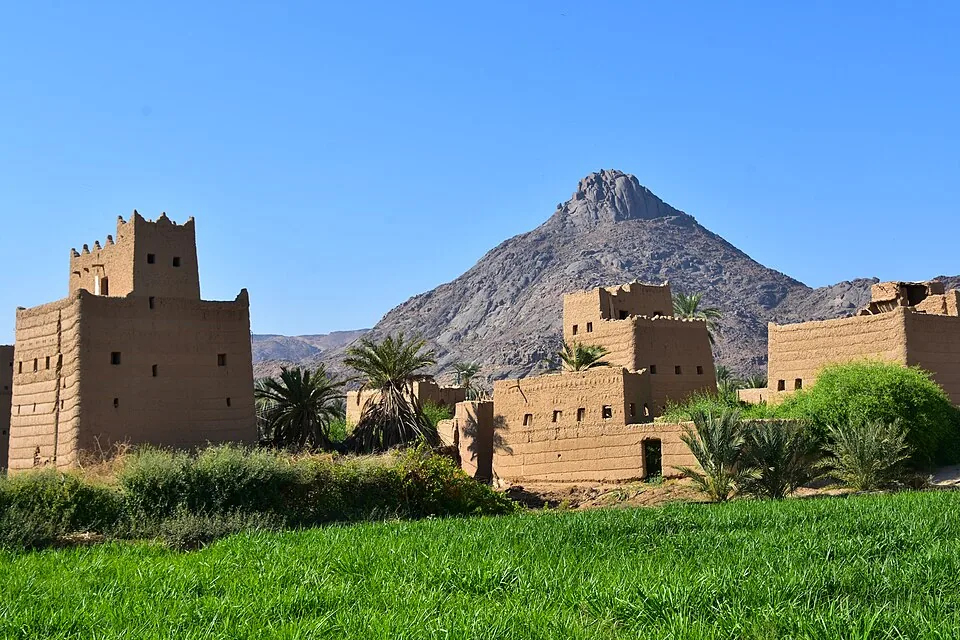
Najran's traditional architecture can be understood through earthen walls, vertical forms and the relationship between buildings and their surroundings. A striking tower-like house is a useful starting point, but it should not become a generic image of every Saudi historic home. Look at the particular building, its materials and the interpretation available for its history and use.
The Najran Municipality architectural-heritage description provides official context for local traditional materials and heritage places. It identifies Al-Aan Palace among the examples. Use that source for the regional account and the actual site's interpretation for individual details. Begin with the Najran Region guide to connect architecture with a considered visit to the area.
Look at the arrangement of storeys, openings and external surfaces. Observe how the building sits within the surrounding settlement or landscape. A distant photograph may emphasise height while hiding entrances and the ground-level relationship to neighbouring spaces. An authorised visit can reveal those connections more clearly, without requiring you to enter a private property.
Ask what the site or guide explains about room use and building history. Different structures can have different functions and periods of alteration. Avoid claiming that every tall house follows one identical plan or that every visible opening served the same purpose. Keep the explanation tied to the building actually discussed.
The municipality's Arabic account describes stone, earth and timber within local building traditions. These materials provide a grounded starting point, but a photograph does not reveal every layer or construction detail. Describe what is visible and seek a competent explanation for technical questions. The visitor's purpose is understanding, not an improvised condition assessment of a heritage structure.
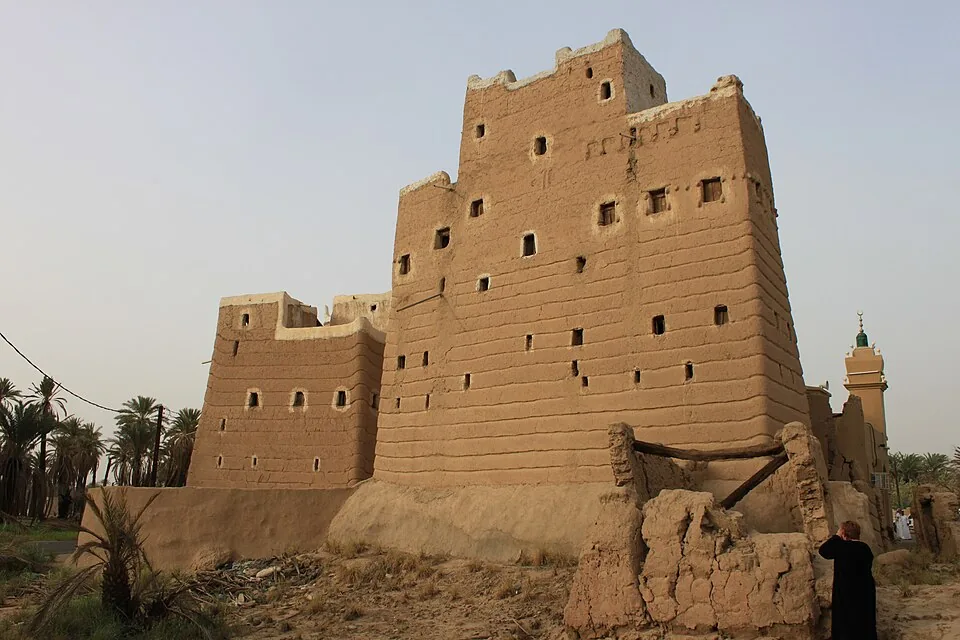
Some traditional buildings may remain occupied or privately managed. Confirm authorised access before entering or photographing interiors. A heritage label does not remove the resident's privacy. Use public routes and ask permission where required, rather than assuming that an attractive doorway is an invitation.
For a managed attraction, check which spaces are available and whether the visit includes a guide or interpretation. A palace name on a map does not establish its current opening arrangements. Confirm the actual destination and entrance. This article does not quote ticket prices, live hours or a guaranteed interior route.
Notice present-day use where it is appropriate to observe. A historic structure can have a continuing role, restoration work or a contemporary display. Keep those layers distinguishable. Describing the whole place as untouched can obscure both the care that preserves it and the people whose activities continue around it.
The At-Turaif guide offers another Saudi context for earthen architecture. The shared material does not make Najran and Diriyah interchangeable. Compare the documented form, setting and history rather than assigning both a single national explanation. A thoughtful comparison helps the differences remain visible.
The Rijal Almaa stone-house guide adds a contrasting mountain context. Use it to notice how material and settlement relationships vary. Do not rank one tradition as more authentic or environmentally appropriate from appearance alone. Those judgements need a defined question and evidence beyond a brief visit.
If keeping a visual notebook, choose a small number of features and record their actual location. An opening, a wall surface and the building's relationship to a slope can become prompts for later research. Mark which interpretation came from the guide and which observation is your own. This prevents an interesting impression from quietly becoming an unsupported fact.
Confirm the route, weather and facilities for the specific destination. A building visible on a hillside may involve a different access experience from a city museum. Ask about changes in level and the authorised walking route where mobility needs matter. A broad regional travel description does not establish that every heritage place offers the same facilities.
Leave time to read or hear the interpretation. A rushed exterior photograph can miss the material and spatial details that make the building distinctive. Choose a manageable number of stops and preserve an alternative if access changes. The aim is a better understanding of a few places, not a collection of images labelled only with the region's name.
Follow conservation rules and avoid touching or climbing historic fabric. A surface can look robust while remaining vulnerable. Do not place objects against walls for a photograph or try to expose a detail by moving something. Respect the responsible party's instructions even if another visitor ignores them.
Najran also offers a wider context beyond built heritage. The Saudi desert-conservation guide introduces a different landscape question. Treat that reading or visit separately from a building outing, with its own access and conservation considerations. Regional variety does not mean every attraction can be added casually to one day.
When sharing photographs, name the building only when the identity is verified. An accurately captioned traditional house is preferable to an image incorrectly labelled as a specific palace. Preserve the visit date and avoid inferring a construction age from appearance. A careful caption helps readers distinguish the subject from the wider regional tradition.
Najran's earthen heritage becomes richer when form, material and setting remain connected to documented interpretation. A respectful visit recognises private boundaries and conservation needs while allowing close visual attention from authorised spaces. That approach gives the reader a meaningful regional story and a sounder understanding than a sweeping claim about all historic Saudi architecture.
Explore About Najran Region, Saudi Arabia
Understand Hima Cultural Area in Najran through its wells, caravan setting and rock inscriptions, with official sources and careful observation exercises.
0 properties selected