

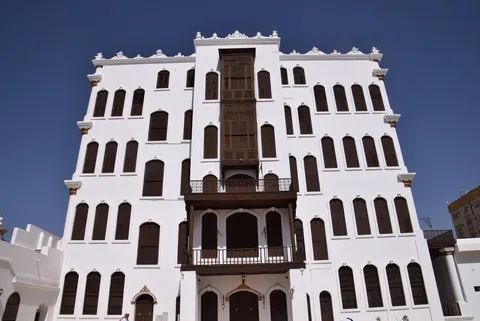
Shubra Palace: Reading Taif Architecture
Explore Shubra Palace in Taif through its facade, carved woodwork, roofline and staircase, with sourced history and clear limits on visitor information.

Understand Historic Jeddah roshan windows through the house, street and Red Sea heritage, with respectful observation and source-linked context.
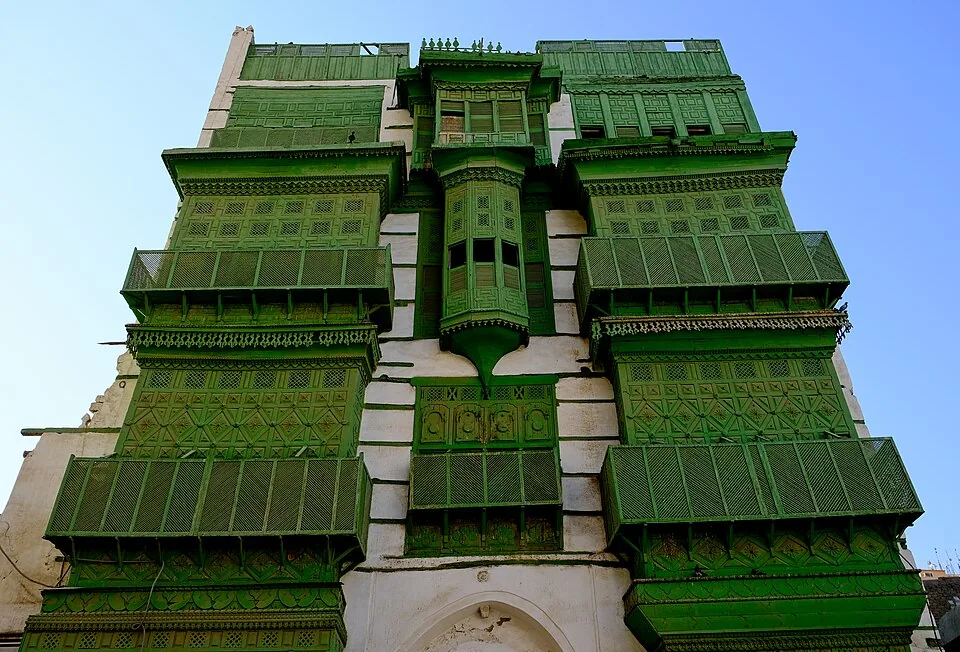
Historic Jeddah's roshan windows are best understood as part of a whole urban and domestic architecture, not isolated decorative objects. The projecting wooden features connect the façade to the rooms behind it and help give Al Balad its distinctive streetscape. When you visit, look at their relationship with building height, openings, ground-level activity and the space of the street. That reveals more than simply collecting photographs of attractive woodwork.
UNESCO's Historic Jeddah entry identifies large wooden Roshan on the city's historic tower houses and connects the architecture with Red Sea trade, pilgrimage and adaptation to the coastal environment. The source establishes heritage context. The observation method below is our own interpretation for readers exploring the city, not a technical conservation assessment of an individual building.
Historic Jeddah developed through connections across the Red Sea and wider trade routes, alongside its role as a gateway for pilgrims travelling to Makkah. UNESCO describes an architectural tradition shaped by that exchange. The windows therefore belong to a story of movement, materials and everyday life as well as visual design. A façade is more informative when considered within that setting.
The Jeddah city guide places Al Balad alongside the modern city's other environments. Keep the historic quarter distinct from contemporary waterfront developments. Both help explain Jeddah, but the appearance and function of a historic tower house should not be used as evidence of the specification or condition of a modern apartment.
Before visiting an individual house or exhibition, check current access and opening arrangements with its operator. A building visible from the street is not necessarily open inside. If a guided visit is available, ask what is original, what has been restored and which explanations are supported by the site's records rather than assuming every visible feature has the same age.
Begin at ground level and look upwards. Notice how entrances and lower openings relate to the upper wooden features. Then observe the rhythm across adjacent houses: repeated elements can create a coherent streetscape while differences give each façade its own character. These are visual observations you can make without claiming to date the timber or identify a restoration method.
Look at projection, depth and shadow. A flat photograph can hide how far a feature extends and how its form changes the experience of the street. Move only within permitted public routes to see the building from another angle. Do not enter a restricted area, touch fragile elements or lean against historic fabric to obtain a better image.
Compare a whole-façade photograph with a detail photograph, where photography is allowed. The first preserves the feature's context; the second records workmanship or pattern. Neither image alone establishes authenticity. If your caption identifies a particular house, verify its name rather than assigning a famous building's identity to a similar-looking façade nearby.
Where a house is legitimately open, consider how the room relates to the window and street. Notice the scale, light and view without assuming that the current furniture arrangement reproduces the original household exactly. An exhibition may interpret a period or use selected objects to tell a story. Ask the guide how that interpretation was developed.
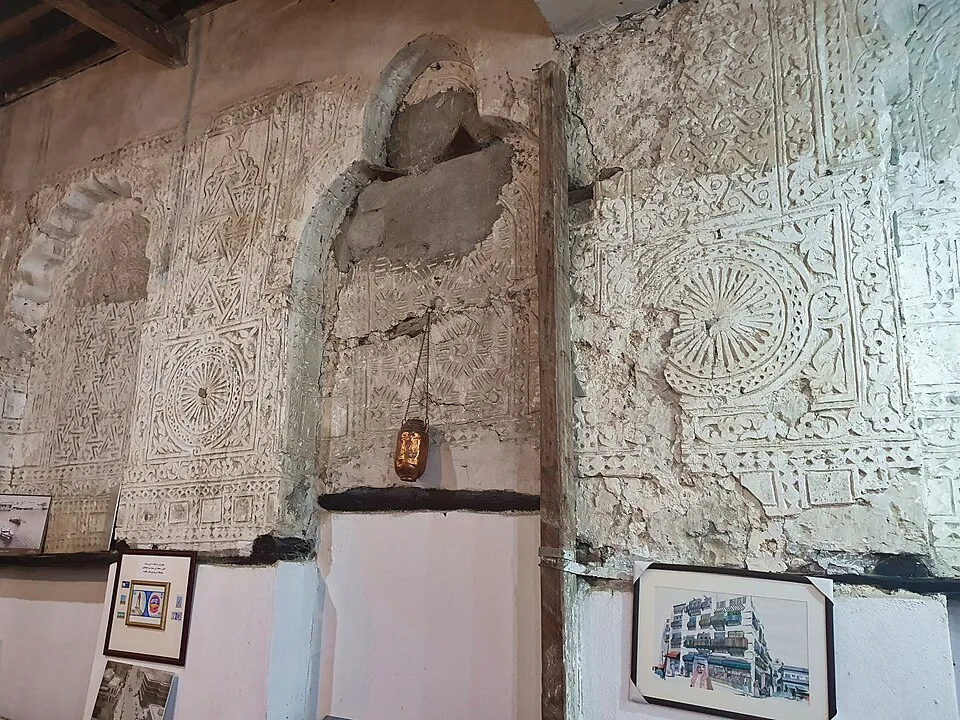
The photograph accompanying this article of a historic Jeddah interior provides domestic context, not proof of the interior behind the exterior photograph. They are separate images with separately recorded subjects and rights. Keeping that distinction clear is important: an attractive sequence of photographs should not invent a visit through one building when the images document different places.
The Makkah Region guide helps extend the geographic context. Architectural connections across the region can be interesting, but avoid treating every wooden window or traditional house as the same type. Names, materials and local histories need their own sources and explanations.
Historic buildings need care, but a visitor should not infer structural safety or conservation quality from colour, neatness or apparent age. New-looking timber may relate to documented repair; weathered material may require specialist assessment. Ask for the site's explanation and use qualified conservation sources where the question goes beyond visual observation.
Respect barriers and staff instructions even if another visitor ignores them. Do not climb, remove fragments or attempt to clean a surface. Conservation rules protect the evidence that makes the place meaningful. A respectful visit also recognises that the district is a city environment, with people working and moving through it, rather than scenery arranged solely for tourist photography.
Plan a manageable walking route and check current conditions. The climate and seasons guide provides broader seasonal context, while the day's weather should guide clothing, breaks and outdoor time. Allow time for observation instead of trying to cover every landmark in one hurried circuit.
Afterwards, keep a few notes explaining what you actually saw: the façade's form, its relationship to the street and any verified interpretation from an open site. Roshan architecture becomes more memorable when its beauty is connected to the house and city that give it meaning. That is a richer way to experience Historic Jeddah than treating each window as a decorative motif detached from its setting.
Explore About Makkah Region, Saudi Arabia
Explore Shubra Palace in Taif through its facade, carved woodwork, roofline and staircase, with sourced history and clear limits on visitor information.
0 properties selected