

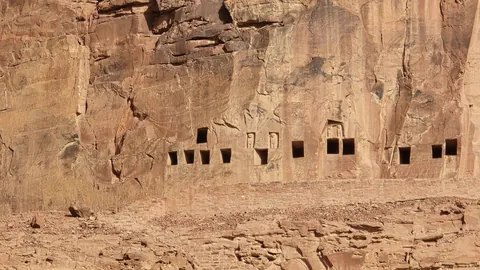
Dadan: Reading AlUla’s Rock-Cut Archaeology
Read Dadan’s sandstone setting, rock-cut openings and material evidence, with four original photographs and clear limits on interpretation.

Plan AlUla Old Town and Hegra as separate heritage visits, understanding their different stories, access arrangements and archaeological context.
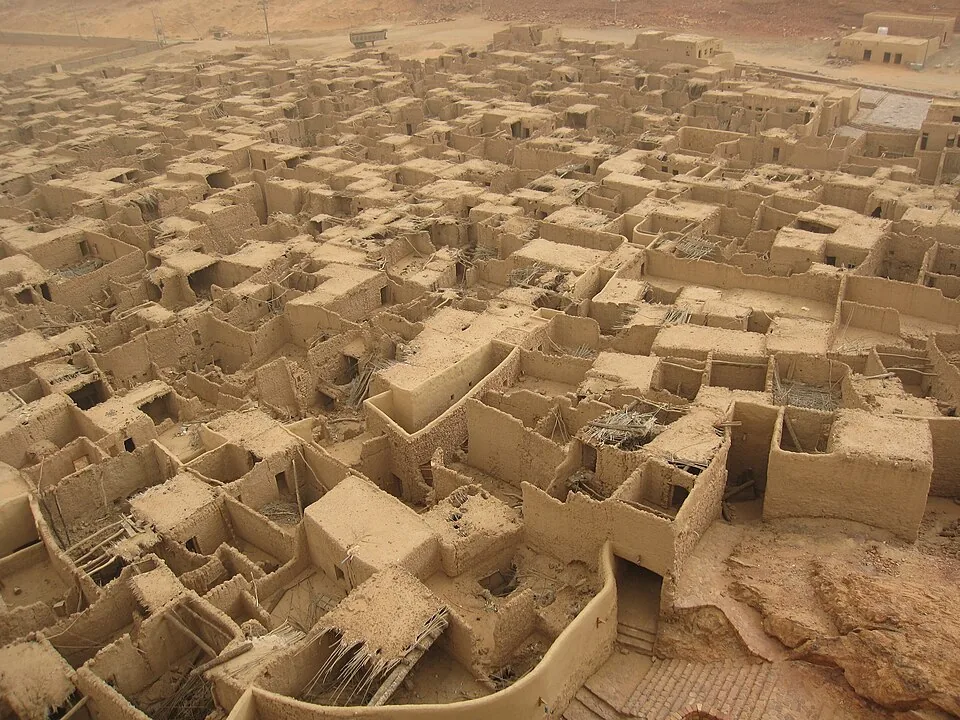
AlUla Old Town and Hegra should be planned as distinct heritage experiences. Old Town invites questions about settlement, streets and the life of a town, while Hegra is an archaeological site known for its monumental rock-cut tombs and Nabataean context. Visiting one does not mean you have seen the other. Give each place its own current access arrangements and enough time for its story to make sense.
UNESCO identifies Hegra as Saudi Arabia's first inscribed World Heritage property and describes its archaeological significance. Visit Saudi's Old Town market page presents a different destination within AlUla. These sources help establish the distinction; they do not turn both sites into one interchangeable stop or promise that any particular visit is available on your travel date.
Use the exact destination name when making a booking or arranging transport. A broad AlUla search can return accommodation, natural landmarks, town experiences and archaeological visits together. That is useful for discovering options, but it can conceal separate locations and operating arrangements. Read the booking description carefully to establish the site, meeting point and included activity.
The Madinah Region guide helps place AlUla in the wider Saudi geography. Do not confuse the administrative region with Madinah city or assume the journey between destinations is negligible. A region-level name provides context; your trip needs specific arrival and onward travel plans.
Check current official or operator information before travelling. Opening arrangements, guided access and booking requirements can change. An older photograph or travel account is not a guarantee that the same route remains open. Keep the date of your check with the booking details so an itinerary prepared several weeks earlier can be reviewed before departure.
At Old Town, look at the relationship between paths, building clusters and the landscape around them. Ask how the settlement was organised and which parts the current visitor route interprets. Where a guide or exhibition provides history, distinguish that explanation from what you can infer visually. A narrow street can prompt questions about movement and domestic life, but it cannot by itself establish a complete social history.
Allow time to observe the scale of the town rather than only individual façades. A view from an authorised elevated position can reveal relationships that disappear at street level, but do not climb outside permitted routes. The Old Town photograph used here shows a townscape in its setting; it is not a photograph of Hegra's tomb façades.
If your visit includes a market or contemporary cultural activity, keep the present experience distinct from the historic fabric. Modern use can make heritage approachable without implying that every shop, display or furnishing has remained unchanged for centuries. Ask how the operator presents that relationship and respect residents, workers and other visitors while photographing.
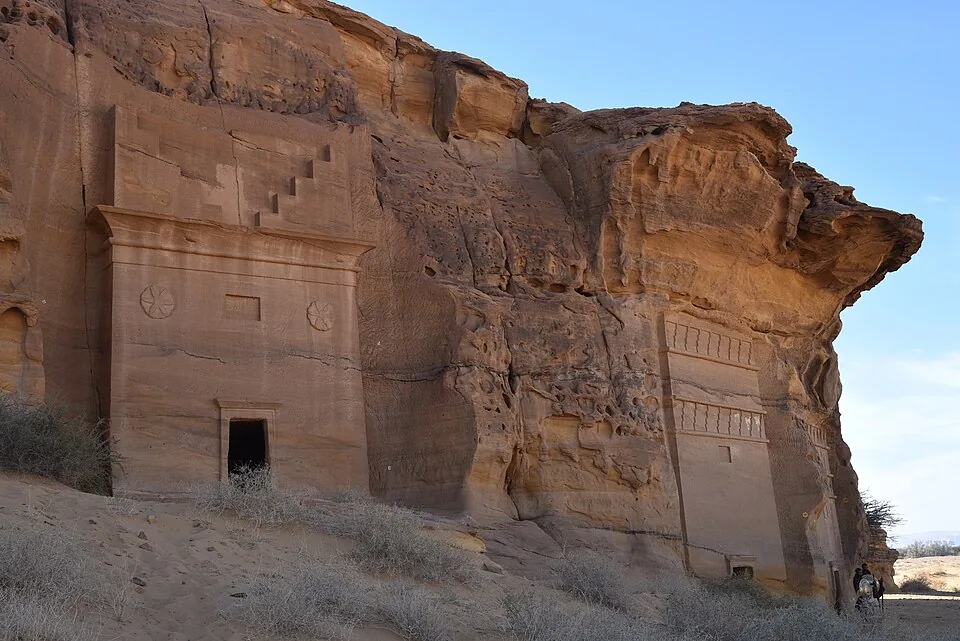
At Hegra, consider the monuments in relation to the surrounding rock and terrain. The scale and placement can be as important to the experience as a close view of a carved façade. Use the site's interpretation to understand the evidence rather than assigning your own meaning to every inscription or decorative feature.
Follow the guide's route and conservation instructions. Do not touch carved surfaces, enter closed spaces or leave the permitted path to imitate a photograph found online. Archaeological access is managed for a reason, and respectful behaviour preserves the material that supports future interpretation. A booking should clarify the experience offered; it should not be assumed to include unrestricted access to every visible feature.
The second photograph in this article shows rock-cut tomb facades at Jabal al-Ahmar in Hegra, while the first shows AlUla Old Town. They document different places and are named separately. Keeping those subjects distinct is essential to useful travel writing: a beautiful sandstone formation elsewhere in AlUla cannot stand in as evidence of a specific archaeological monument simply because both are in the same destination region.
Plan travel time, check-in requirements and rest between experiences. A full day on paper may become rushed if each activity has a fixed meeting point and start time. Avoid booking close connections based only on straight-line map distance. The travel and transport guide provides a broader planning framework for journeys within Saudi Arabia.
Consider the season and current weather. The climate and seasons guide can help frame outdoor planning, but the day's forecast and operator instructions should determine your preparation. Choose manageable time outdoors and appropriate breaks rather than assuming one itinerary suits every visitor and season.
After visiting, note what each place helped you understand. Old Town may sharpen your sense of settlement and everyday spatial organisation; Hegra may deepen your understanding of archaeological evidence and monumental form. Keep verified facts, guided interpretation and your own impressions distinguishable.
AlUla is more rewarding when its places retain their identities. A thoughtful itinerary makes room for their differences instead of collecting them under one general heritage label. That approach improves both the journey and the accuracy of the story you bring home.
Explore About Madinah Region, Saudi Arabia
Read Dadan’s sandstone setting, rock-cut openings and material evidence, with four original photographs and clear limits on interpretation.
0 properties selected