


Farasan Mangroves: Roots, Channels and Coastal Habitat
Understand Farasan’s mangrove habitat through roots, water channels and coastal connections, with dated official sources and careful ways to read photographs.

Plan a Farasan Islands visit that respects habitats and communities, with precise destinations, authorised activities and current transport checks.

The Farasan Islands are best approached as an island landscape with communities, habitats and managed access, rather than an empty beach destination available for unrestricted exploration. Plan the actual island, transport and authorised activity, then follow the current conservation and operator instructions. A beautiful coastal photograph does not establish where you may land, swim, camp or travel independently.
The National Center for Wildlife's protected areas information identifies the Farasan archipelago's ecological importance and describes its inhabited islands alongside marine and terrestrial biodiversity. This is the official background for the article. The practical visit guidance below is our own planning interpretation, not a permit, a species-sighting promise or a statement that every part of the protected area is open.
Farasan refers to more than one island and more than one possible experience. Ask exactly where a proposed trip goes, how arrival is arranged and which activity is included. A general booking description should be clarified before you assume it includes a boat excursion, wildlife observation or a visit to a particular settlement. Keep the meeting point and return arrangement explicit.
The Jazan Region guide places the islands within the wider region, while the Jazan city guide provides mainland context. Use both scales to plan the journey. A mainland arrival and an island visit are separate travel stages, each needing current timing and access information.
Confirm transport with the relevant operator rather than relying on an old schedule in a travel article. Ask about booking, check-in and the conditions under which plans may change. Do not arrange a tight onward connection that assumes an island journey can never be delayed. A realistic return plan is part of a responsible visit.
Use an authorised guide or operator where appropriate and ask which environments the visit covers. A coastline, marine setting and settlement experience offer different ways to understand the islands. Do not assume that a named species will appear because it is associated with the wider protected area. Wildlife observation depends on conditions and should not become a demand placed on the guide.
Avoid feeding, chasing or disturbing animals. Keep the distance and route instructed by the responsible operator. Do not collect shells, fragments, plants or other natural material without establishing that the activity is permitted; the safer visitor habit is to leave the landscape intact. A photograph is more valuable when it records respectful observation rather than an encounter created through disturbance.
If an activity involves the water, obtain the current operator's information about the exact location, equipment and requirements. A general destination article cannot establish that a particular shoreline is suitable for swimming or that independent boating is appropriate. Follow local rules and current conditions, not the visual calm of an old image.
The islands are not only a conservation scene. Ask before photographing people, homes or working spaces, and avoid treating residential areas as freely accessible exhibits. A guide can help explain which cultural sites are open and how to visit them appropriately. An invitation to one place should not be extended to neighbouring private areas.
Use services through clear arrangements and understand what is included in the price. Do not assume a tour package includes every meal, transfer or entry because the destination is remote. Confirm the provider, scope and payment arrangements through a reliable channel. These practical details make the visit easier for both the traveller and the people providing it.
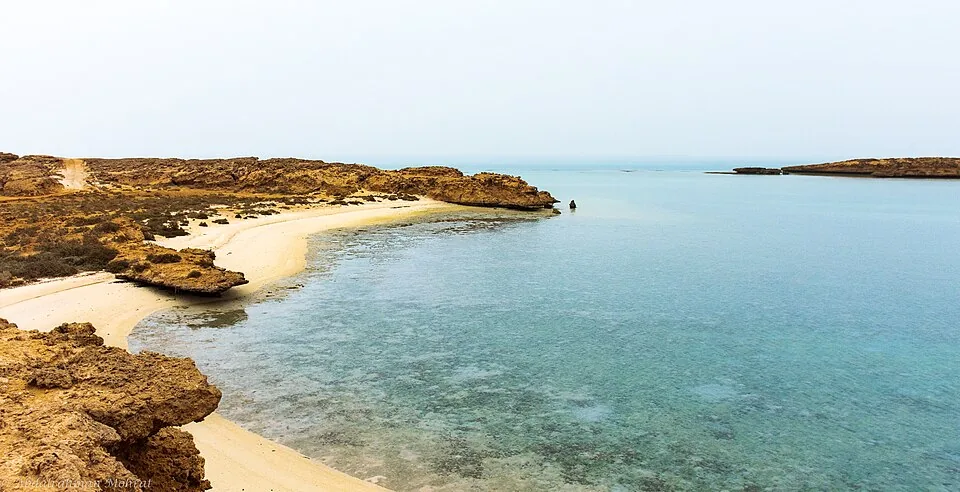
Both photographs here show shoreline scenes on Farasan Island in Jazan Region. Their different coastal views illustrate the island setting, rather than Jazan’s mainland waterfront. These historical photographs do not establish access, transport arrangements or conditions at your chosen landing point; confirm those details for the actual journey.
Review current weather and marine or transport instructions relevant to the trip. The climate and seasons guide provides broad Saudi context, while the day's information should guide the activity. If an operator changes or cancels a plan, ask about the available alternative and follow the instructions rather than seeking an unofficial route.
Consider drinking water, sun protection, suitable clothing and the needs of everyone travelling. Verify facilities for the actual destination instead of assuming every island stop offers the same services. Bring only what you can manage responsibly and carry waste back through the appropriate disposal arrangement. A small outing can still create avoidable impact if visitors leave packaging behind.
Use the travel and transport guide to coordinate the wider trip, but keep island-specific details with the current operator's information. Plan a manageable main experience and an alternative that is genuinely available. Do not turn a list of desirable activities into an expectation that all can happen in one day.
Farasan is more rewarding when the journey recognises the islands' ecological value and everyday life together. Choose a precise destination, use authorised access, respect habitats and communities, and keep the return practical. That approach lets the place retain its meaning without promising unrestricted adventure or a guaranteed wildlife encounter.
Explore About Jazan Region, Saudi Arabia
Understand Farasan’s mangrove habitat through roots, water channels and coastal connections, with dated official sources and careful ways to read photographs.
0 properties selected