
Al-Qatt Al-Asiri: Understanding a Living Art Tradition
Understand Al-Qatt Al-Asiri through practitioners, decorated rooms and regional context, with careful attribution and respectful cultural visits.
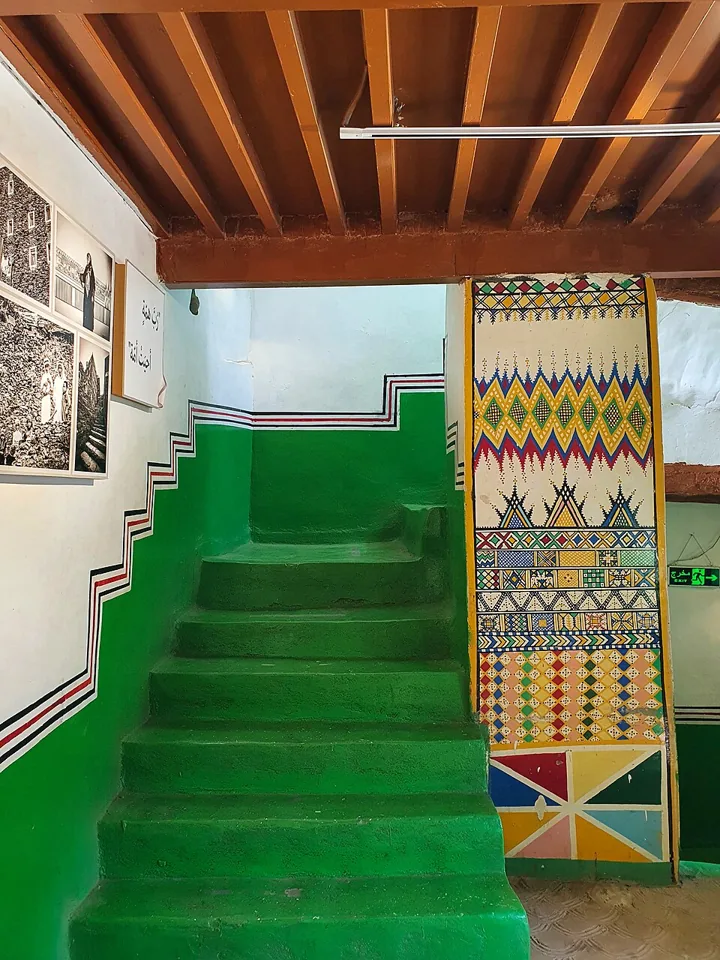

Understand the tradition beyond a pattern
Al-Qatt Al-Asiri is a decorative tradition associated with interior walls in Asir, and its meaning extends beyond colourful geometric shapes. Understanding it requires attention to practitioners, domestic settings and the transmission of knowledge, rather than treating every patterned surface as an interchangeable souvenir design. A visit or conversation becomes richer when the work remains connected to the people and place behind it.
UNESCO's Al-Qatt Al-Asiri description identifies the tradition as historically female interior wall decoration associated with the region's identity. This is source-backed context, not a claim that every modern decorated room has the same provenance. Start with the Aseer Region guide to place the tradition within a wider regional understanding.
Look at the wall within the room
A cropped image can show colour and geometry while removing the room's scale and use. Where an authorised interior visit is available, notice how decorated bands relate to doors, corners and the space in which people gather. Look at the whole arrangement before concentrating on one detail. That relationship can be more informative than a pattern photographed as an isolated object.
Read the site's interpretation and ask what it says about the particular decoration. Is it an identified work, a restored interior or a contemporary presentation? Keep those descriptions separate. A heritage-style setting can be meaningful without being presented as untouched historic material. The account should reflect the evidence actually available.
Do not label every colourful geometric wall as a verified example based on appearance alone. Ask the responsible guide or practitioner about the work and its setting. A careful caption may describe a painted interior while leaving a more specific attribution unconfirmed. This respects both the tradition and the limits of what a visitor can establish visually.

Ask about practice and knowledge
Where a practitioner or authorised guide welcomes questions, ask about how the work is planned and how skills are learned. Keep the questions open and respectful. Avoid assuming that one person's method defines every example across Asir. A living tradition can include variation and contemporary practice alongside continuity.
The Saudipedia account of Al-Qatt Al-Asiri provides further context on the tradition and its recognised forms. Use it as a reference for research rather than a script that overwrites what the particular practitioner explains. If identifying a motif, check the terminology and attribution instead of assigning a symbolic meaning because the shape resembles something familiar.
Ask before taking photographs or recording an explanation. Permission to view an interior does not automatically include permission to reproduce every detail commercially. The fact that a pattern is part of a cultural tradition does not settle the rights associated with a particular photograph or contemporary work. Keep source and permission information when sharing material.
Connect decoration with regional architecture
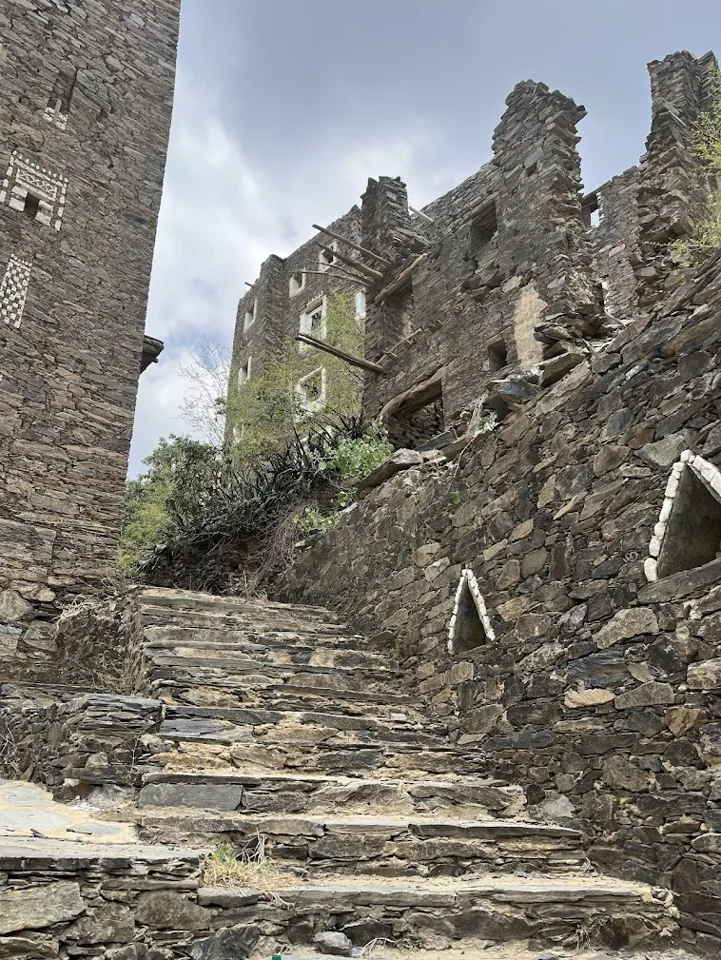
The Rijal Almaa architecture guide introduces a setting where exterior forms and interior experiences can be explored as related questions. A stone facade and a decorated room tell different parts of a visit. Do not assume that every building has an accessible decorated interior or that one photographed room represents the whole village.
For a different regional comparison, read the Najran earthen-heritage guide. Keep the geographic and cultural contexts distinguishable. Saudi regional traditions deserve specific names and sources; describing every decorative feature as the same national style can erase the variation that makes them interesting.
Observe how the room is presented today. Furniture, lighting and interpretation may shape the visitor's view of the decoration. Record those conditions without assuming they reproduce one historic arrangement exactly. A contemporary display can help explain a tradition while still needing an honest description of what has been reconstructed or arranged.
Plan a visit or workshop carefully
Identify the actual operator and what the experience includes. A museum visit, an artist demonstration and a participatory workshop answer different questions. Confirm whether the practitioner is named, whether language support is available and what participants will do. Do not infer an expert-led experience from a generic listing photograph.
Ask about the practical route and setting if anyone has mobility needs. Confirm surfaces, steps and seating for the actual activity. A regional cultural attraction label does not establish that every room or workshop is accessible. Leave time for observation and questions rather than combining the experience with a rushed sequence of unrelated stops.
If purchasing a work or item, ask for a clear description of its maker, material and production method where the seller can provide it. Distinguish an original piece from a printed reproduction or a broadly inspired design. None of those categories is automatically wrong, but the buyer should understand what is being offered rather than rely on an ambiguous heritage label.
Share an accurate account
Write a caption that identifies the actual place, work or visible feature and the source of any interpretation. Do not invent an artist's identity or describe a contemporary interior as centuries old without evidence. A photograph of a Rijal Almaa heritage building provides regional context; it is not by itself proof of the provenance of a particular decorative tradition.
For another aspect of living cultural practice, explore the Saudi coffee-hospitality guide. The comparison concerns respectful attention to people and setting, not a claim that the two traditions are identical. Al-Qatt Al-Asiri is most rewarding when the shapes remain connected to practice, knowledge and the regional context that gives them meaning.
Sources and review
- UNESCO's Al-Qatt Al-Asiri description — reviewed 29 September 2026. Official primary context. Practical methods and fictional scenarios are original editorial analysis; no current market quotation is asserted.
- Saudipedia account of Al-Qatt Al-Asiri — reviewed 29 September 2026. Official primary context. Practical methods and fictional scenarios are original editorial analysis; no current market quotation is asserted.